
An Introduction to Laser Cutting
Laser cutting is a precise, high-speed cutting process that uses a focused laser beam to cut through various materials. It is renowned for its accuracy and ability to produce intricate designs with clean edges. Laser cutting is widely used in industries such as automotive, aerospace, signage, jewelry, and electronics.
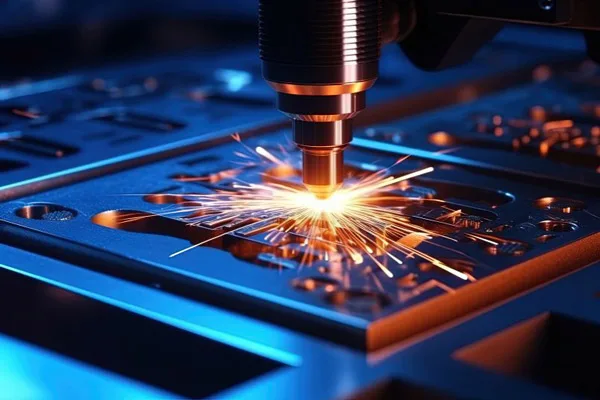
Laser cutting
The Working Principle of Laser Cutting
Laser cutting involves concentrating a high-powered laser beam onto the surface of a material. The laser heats the material to its melting or vaporization point, causing it to cut through. The process typically includes the following steps:
- Generation of Laser Beam: A laser generator produces a coherent, intense beam of light, often using CO₂ or fiber laser technology.
- Focusing: The laser beam is focused through a lens to a very small spot, increasing its power density.
- Cutting: The focused laser is directed by computer-controlled mirrors (galvanometers) along the desired path.
- Material Removal: The intense heat melts, vaporizes, or burns away the material, creating a clean cut.
Laser cutting can be performed on a variety of materials, including metals (steel, aluminum, brass), plastics, wood, and fabrics.
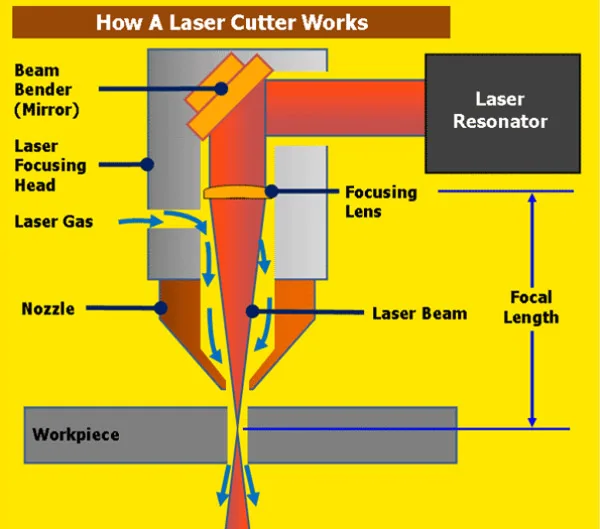
Laser cutting work
Types of Laser Cutters
Laser cutters are classified based on the type of laser used:
CO₂ Lasers: Commonly used for cutting non-metallic materials like wood, acrylic, rubber, and textiles, but also capable of cutting thin metals.
Fiber Lasers: Offer higher efficiency and are mainly used for metal cutting, especially thin sheet metal.
Nd:YAG Lasers: Used for high-power applications and engravings, suitable for metals and other hard materials.
Each type has specific advantages depending on the material and precision requirements.
An Introduction to Plasma Cutting
Plasma cutting is a process that uses a high-velocity jet of ionized gas (plasma) to cut through electrically conductive materials. It is favored for its speed, versatility, and ability to cut through thick metals efficiently.
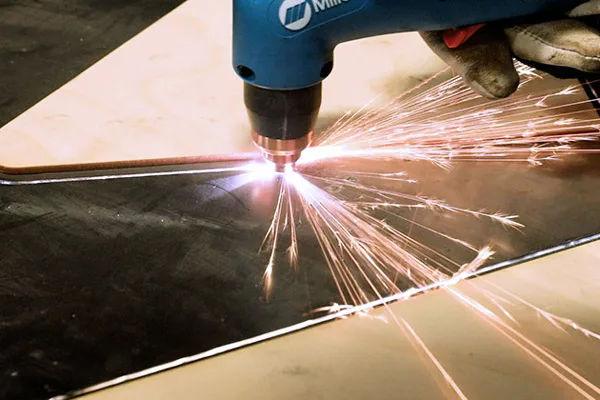
Plasma cutting
The Working Principle of Plasma Cutting
The plasma cutting process involves the following steps:
- Generation of Plasma: An electric arc is created between an electrode and the workpiece. Compressed air or inert gases (like nitrogen or oxygen) are ionized to form plasma.
- Focusing the Arc: The plasma is directed through a constricting nozzle, creating a high-temperature, high-velocity jet.
- Cutting: The plasma jet conducts electrical current to the workpiece, melting and blowing away the metal along the cut path.
- Control: The process is controlled via CNC systems for precision cuts.
Plasma cutting works best with electrically conductive metals such as steel, stainless steel, aluminum, brass, and copper.
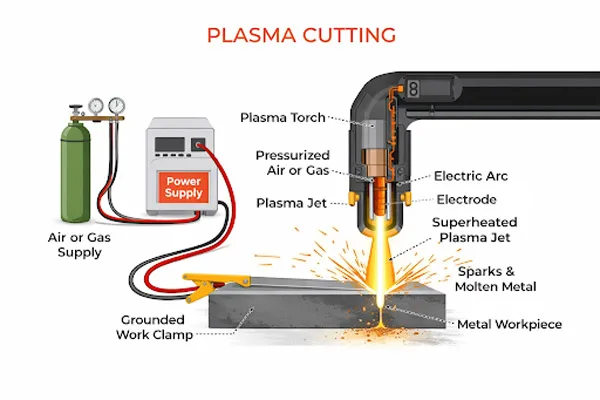
Plasma cutting work
Types of Plasma Cutters
Plasma cutters are categorized based on their power and application:
Manual (Hand-held) Plasma Cutters: Portable units for on-site or small-scale cutting.
Automated (Gantry or CNC) Plasma Cutters: Larger, computer-controlled systems for precise, repetitive cuts on thick or large materials.
High-Definition Plasma Cutters: Offer superior cut quality with smoother edges and finer detail, suitable for industrial applications.
Key Differences Between Laser Cutting and Plasma Cutting
|
Aspect |
Laser Cutting |
Plasma Cutting |
| Material Compatibility | Metals, plastics, wood, fabrics | Mainly conductive metals |
| Thickness Capacity | Up to 25mm (varies with laser type) | Can cut thick metals (up to 50mm or more) |
| Precision | Very high, intricate detail | Moderate, suitable for thicker cuts |
| Cut Quality | Clean, smooth edges | Slightly rougher edges, sometimes requiring finishing |
| Speed | Fast for thin materials | Very fast for thick metals |
| Cost | Higher initial investment | Lower equipment costs |
Pros and Cons of Laser Cutting
Pros:
Ultra-precise and detailed cuts
Clean edges with minimal finishing
Capable of intricate designs and small holes
Versatile materials (metals, plastics, textiles)
Minimal material wastage
Cons:
High initial equipment costs
Limited thickness for some materials
Can be slower on thicker materials
Requires skilled operators and maintenance
Pros and Cons of Plasma Cutting
Pros:
Excellent for cutting thick metals
Lower equipment and operational costs
High-speed cutting process
Suitable for on-site and industrial applications
Easier to operate
Cons:
Less precise, with rougher edges
Limited to conductive materials
Not suitable for very fine detailed work
Potential for heat-affected zones (HAZ)
Choosing the Right Cutting Method for Your Project
Deciding between laser and plasma cutting depends on several factors:
Material Type: Use laser cutting for non-conductive materials or intricate designs; plasma for thick, conductive metals.
Thickness: Laser is ideal for thin to medium thickness; plasma excels with thicker materials.
Precision Needs: For detailed, fine work, laser is preferable.
Budget: Plasma cutters are generally more affordable and suitable for large-scale or industrial cutting.
Project Scale: Consider automation, speed, and volume of parts to determine the best fit.
When to Use Laser Cutting Vs Plasma Cutting?
Use Laser Cutting When:
You need high precision and fine detail
Working with thin metals, plastics, or non-metallic materials
Producing complex, intricate designs
Minimizing material wastage is important
Use Plasma Cutting When:
Cutting thick, heavy metals
Speed is a priority over fine detail
Working with large-scale, industrial projects
Cost efficiency is a concern
Conclusion
Both laser cutting and plasma cutting are powerful tools in modern manufacturing, each suited to different applications. Laser cutting offers unmatched precision and is ideal for detailed designs and a variety of materials, but comes with higher costs and limitations on thickness. Plasma cutting, on the other hand, is highly effective for quickly cutting thick metals, with lower equipment costs but less finesse.
Understanding your project requirements—material type, thickness, precision, budget, and volume—will help you choose the optimal method. By leveraging the strengths of each technology, manufacturers and fabricators can achieve high-quality results efficiently and cost-effectively.