
The automotive industry has seen a significant shift towards the use of plastics over the past few decades. This transition is driven by the need for lighter, more fuel-efficient vehicles, as well as the desire to improve safety, comfort, and overall vehicle performance. Plastics offer numerous advantages, including weight reduction, corrosion resistance, design flexibility, and cost-effectiveness. As a result, various types of plastics are now integral to modern vehicle manufacturing, each serving specific functions to meet the demanding requirements of the automotive sector. To put this shift into perspective, consider that a typical passenger car in the 1970s contained less than 50 kg (110 lbs) of plastic. Today, that figure has grown to over 200 kg (440 lbs) per vehicle, accounting for roughly 15–20% of total vehicle weight. This evolution has been driven by tightening fuel economy standards and the global push for lower emissions.
Key Plastics Used in Automotive Manufacturing
Polypropylene (PP)
Polypropylene is one of the most widely used plastics in automotive manufacturing due to its excellent balance of strength, flexibility, and chemical resistance. It is commonly employed in interior components such as dashboards, door panels, and bumpers. Its lightweight nature helps in reducing the overall weight of the vehicle, improving fuel efficiency. Polypropylene accounts for approximately 32% of all plastics used in a typical car. One reason for its dominance is its fatigue resistance – it can be molded into living hinges that bend thousands of times without cracking, making it ideal for glove box doors and flip-down storage bins. Additionally, PP is often reinforced with talc or glass fibers to increase stiffness for structural parts like fan shrouds and battery trays.
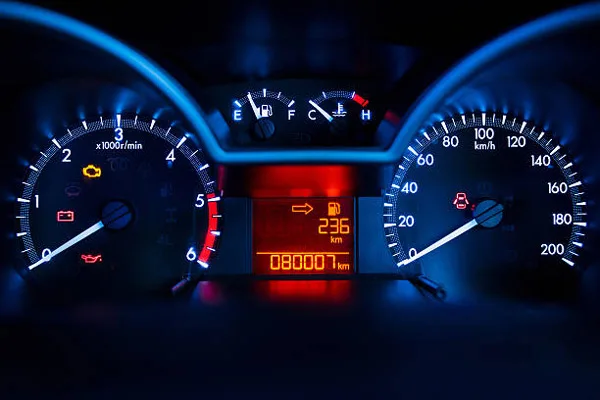
Car dashboard
Polycarbonate (PC)
Polycarbonate is known for its high impact resistance and optical clarity. It is often used in headlight lenses, instrument panels, and interior glazing. Its durability makes it suitable for parts that require high impact strength and transparency. Polycarbonate is 250 times stronger than glass but only half the weight. Modern headlight lenses are almost universally made of PC with a UV-cured hard coating to resist scratches and yellowing. Beyond headlights, PC is increasingly used for panoramic sunroofs and fixed side windows, where weight savings directly improve vehicle range – a critical factor for electric vehicles.
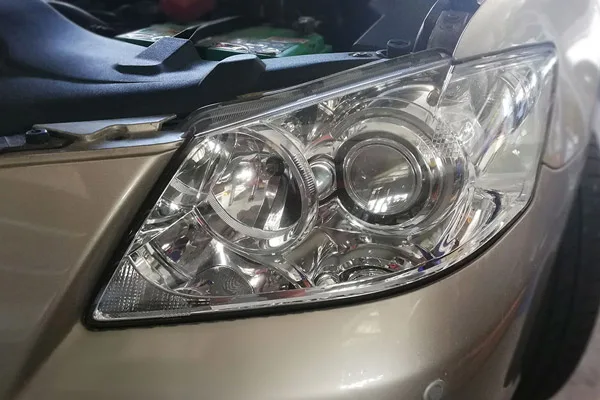
Plastic headlights
Acrylonitrile Butadiene Styrene (ABS)
ABS is a tough, rigid plastic that offers good impact resistance and surface finish. It is frequently used in dashboard components, center consoles, and exterior trim parts. Its ease of molding and finishing makes it ideal for complex shapes and decorative applications. A unique advantage of ABS is its ability to be chrome-plated directly, without the need for an expensive metal substrate. This is why many interior door handles, grille emblems, and shift lever bezels have a bright, metallic finish while being entirely plastic. ABS is also commonly blended with polycarbonate (PC/ABS) to increase heat resistance for applications like instrument panel retainers and knee bolsters.
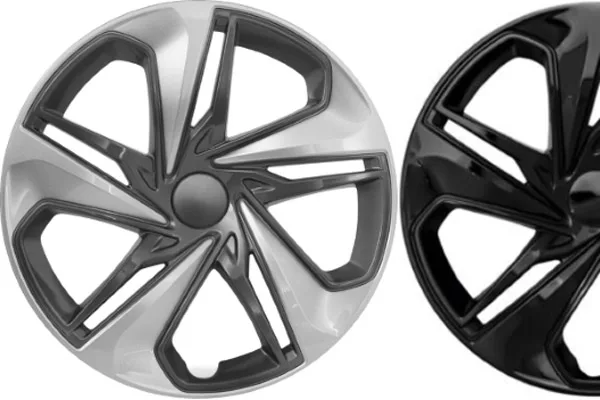
Wheel covers
Polyvinyl Chloride (PVC)
PVC is a versatile plastic used in a variety of automotive parts, including interior trim, door panels, and flooring. It is valued for its durability, chemical resistance, and affordability. When flexible, it is used in wiring insulation and seals. One of the largest-volume uses of PVC in automobiles is not inside the cabin but underneath the vehicle. Heavy‑duty PVC‑based sealants are sprayed onto the car’s underbody to protect against stone chips, road salt, and moisture – effectively replacing heavy, corrosion‑prone metal coatings. PVC also plays a critical role in electrical systems, where its flame‑retardant properties make it the standard insulation for low‑voltage wiring harnesses.
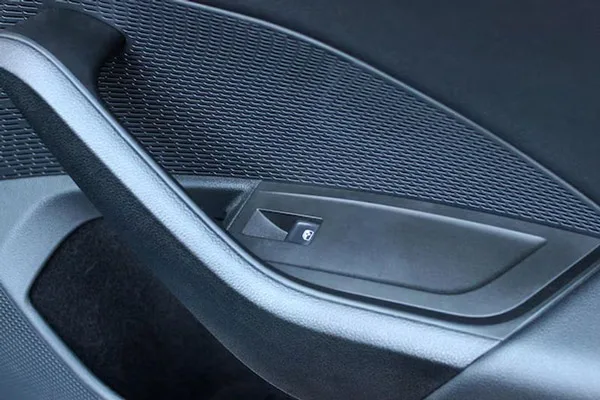
Auto interior door panel
Nylon (Polyamide)
Nylon is known for its high mechanical strength, thermal stability, and wear resistance. It is used in engine components, gears, and under-the-hood parts. Its durability helps withstand harsh conditions in engine bays. Glass‑fiber‑reinforced nylon (typically PA6 or PA66) is the material of choice for replacing metal under the hood. A classic example is the intake manifold: converting a cast aluminum manifold to nylon reduces weight by up to 40% and improves air flow due to smoother internal surfaces. Nylon is also found in oil pans, thermostat housings, and coolant reservoirs, where it must resist continuous temperatures of 150–200°C and exposure to aggressive chemicals.
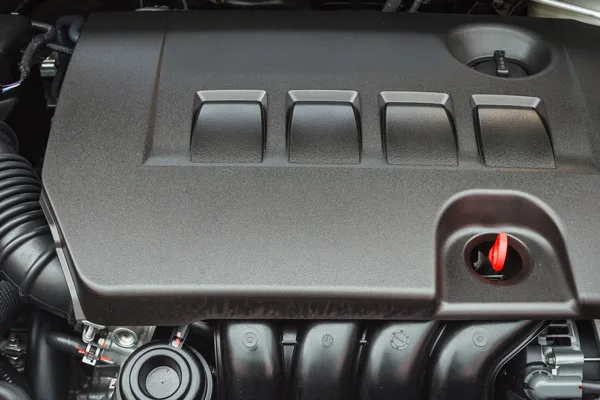
Engine cover
Thermoplastic Elastomers (TPE)
TPE combines the properties of rubber and plastic, offering flexibility, elasticity, and resistance to weathering. It is used in seals, gaskets, and flexible tubing within vehicles. Unlike traditional thermoset rubber, TPEs can be injection‑molded and recycled, reducing both production time and material waste. Common automotive TPE applications include weatherstripping around doors and windows, boot and shift lever seals, and blow‑molded ductwork for HVAC systems. TPEs are also increasingly used for soft‑touch overmolding on interior handles and steering wheel controls, improving ergonomics and perceived quality.
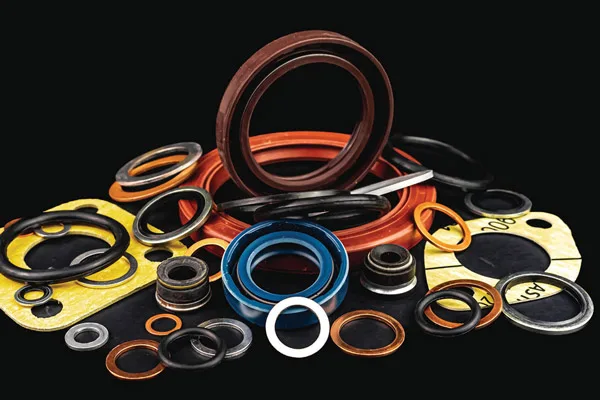
Gaskets and Seals
The Role of Plastics in the Auto Industry
Weight Reduction:
Plastics are significantly lighter than metals, which helps improve fuel efficiency and reduce emissions.
Cost Savings:
Plastic parts are generally cheaper to produce and mold, reducing manufacturing costs.
Design Flexibility:
Plastics can be molded into complex shapes and intricate designs that are difficult or impossible with metal.
Corrosion Resistance:
Unlike metals, plastics do not rust, increasing the longevity of vehicle components.
Sound and Vibration Damping:
Plastics can absorb noise and vibrations, enhancing ride comfort.
Safety: Plastics can absorb impact energy and are used in safety features like crash zones and airbags.
Thermal and Electrical Insulation:
In electric vehicles (EVs), high‑voltage components must be reliably isolated. Plastics such as PBT (polybutylene terephthalate) and PET are used in battery module housings, connector blocks, and busbar covers because of their excellent dielectric strength.
Part Consolidation:
A single injection‑molded plastic component can replace an assembly of 10–15 separate metal parts, eliminating fasteners, reducing assembly time, and lowering warranty costs. For example, modern dashboard carriers (cross‑car beams) are often made of glass‑fiber‑reinforced polypropylene with integrated ductwork, wire channels, and mounting points.
Conclusion
Plastics play a vital role in modern automotive design and manufacturing. With a wide variety of plastics available, each offering specific benefits, automakers can enhance vehicle performance, safety, and aesthetics while reducing weight and costs. As technology advances, the use of innovative plastics is expected to grow further, contributing to more sustainable and efficient vehicles in the future.
Looking ahead, three major trends will shape automotive plastics:
- Circular Economy & Recycling: Automakers are increasingly specifying post‑consumer recycled (PCR) plastics. Ford uses recycled plastic bottles to make wheel liners; Mercedes‑Benz uses recycled carbon fiber and textile waste in trim parts. “Design for disassembly” is becoming a standard engineering practice.
- Bio‑Based Polymers: Polyamides derived from castor oil (PA610, PA11) and polypropylene from bio‑naphtha are entering production. These materials reduce the carbon footprint of plastic parts by up to 50–70% compared to fossil‑based counterparts.
- Electric & Autonomous Vehicles: EVs require new plastic solutions for battery thermal management, lightweight battery enclosures, and sensor housings for LiDAR and cameras – all of which demand precision, durability, and electromagnetic shielding properties that advanced polymers can provide.
In summary, the partnership between plastics and the automotive industry is not only enduring but deepening. The car of 2035 will still be built largely from polymers – but those polymers will be lighter, stronger, greener, and smarter than anything available today.