
In the rapidly evolving aerospace industry, the demand for lightweight, durable, and high-performance materials has never been greater. Among these materials, advanced composites have emerged as a critical component in the development of next-generation aircraft and spacecraft. To fully harness the potential of these high-performance composites, precise manufacturing techniques are essential. Computer Numerical Control (CNC) machining has become a vital technology in this landscape, enabling the efficient and accurate fabrication of complex composite prototypes. This article explores how CNC machining empowers aerospace engineers and manufacturers to develop cutting-edge composite components for aerospace prototyping.
The Rise of High-Performance Composites in Aerospace
High-performance composites, such as carbon fiber-reinforced polymers (CFRPs), offer exceptional strength-to-weight ratios, corrosion resistance, and thermal stability. These properties make them ideal for aerospace applications, where reducing weight while maintaining structural integrity is paramount. From fuselage panels and wing structures to engine components, composites are transforming aerospace design.
However, working with these advanced materials presents unique challenges. Composites are often anisotropic, meaning their strength and stiffness vary depending on fiber orientation. They require meticulous handling and precise machining to ensure optimal performance and safety. This is where CNC machining plays a crucial role.
The Role of CNC Machining in Composite Prototyping
CNC machining involves the use of computer-controlled tools to remove material from a workpiece with high precision and repeatability. When applied to composites, CNC machining offers several advantages:
Precision and Accuracy: CNC machines can produce complex geometries with tolerances often within a fraction of a millimeter. This level of precision is essential for aerospace prototypes, where even minor deviations can impact performance.
Complex Geometry Capability: Aerospace components often feature intricate shapes and tight tolerances. CNC machining allows for the creation of complex contours, internal channels, and detailed features that would be difficult or impossible with traditional manufacturing methods.
Material Efficiency: CNC machining minimizes waste by precisely removing only the necessary material, which is especially important given the high cost of composite materials.
Repeatability: Once a design is programmed, CNC machines can produce multiple identical prototypes, ensuring consistency across production runs.
Rapid Prototyping: CNC machining accelerates the development cycle by enabling quick iteration of designs and testing of prototypes, reducing time-to-market.
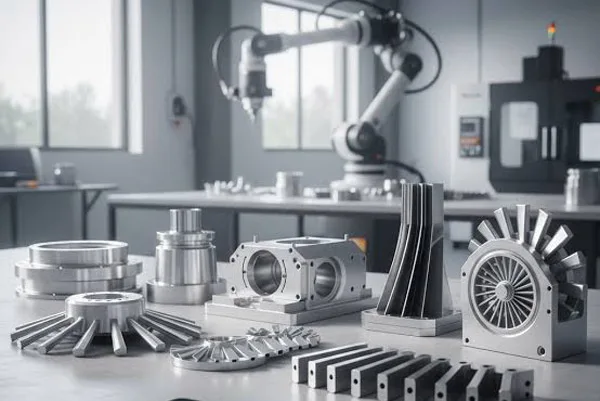
CNC aerospace parts
Critical Machining Operations for Aerospace Composites
While general milling is foundational, aerospace prototype development demands mastery of two particularly challenging operations: high-speed drilling and edge trimming.
High-Speed Drilling and Countersinking:
Over 60% of composite part rejections in prototyping stem from drilling-induced delamination. To mitigate this, aerospace machinists employ specialized tool geometries such as “dagger drills” and “step drills” that progressively enlarge the hole to reduce axial thrust. A critical best practice is the use of sacrificial backing plates—hardwood or solid composite panels placed beneath the workpiece—which prevent explosive fiber splintering as the drill bit exits the material. Furthermore, thrust force must be meticulously controlled; exceeding 70–80 Newtons on standard carbon-fiber laminates significantly increases delamination risk. For countersinking, orbital countersinking or precision stop-collar tools are preferred over traditional manual countersinks to maintain concentricity and prevent fiber tear-out at the countersink edge.
Edge Trimming and Profiling:
Achieving clean, burr-free edges on prototype airfoils and panels requires a different approach than standard milling. Diamond-grit abrasive routers are often favored over fluted carbide end mills for finish-pass trimming, as the abrasive action shears fibers cleanly rather than pulling them out. When fluted tools are used, climb milling is mandatory to direct cutting forces downward into the laminate, reducing edge fraying. To maintain edge quality, tool replacement intervals must be strictly enforced—typically every 5 to 10 linear meters of cut in high-fiber-volume CFRP—as dulling occurs rapidly and degrades surface finish beyond aerospace tolerances.
Specialized Techniques for Machining Composites
Machining composites requires specialized tools and techniques to prevent damage and ensure quality:
Tool Selection: Carbide or diamond-coated cutting tools are preferred for their durability and ability to cut through tough fibers without excessive wear.
Feed Rates and Speeds: Optimizing cutting parameters minimizes fiber pull-out, delamination, and burr formation.
Cooling and Lubrication: Proper cooling prevents heat buildup, which can degrade the composite material.
Fixture Design: Securely fixturing the workpiece prevents movement during machining, ensuring dimensional accuracy.
Post-Processing, Surface Quality, and Non-Destructive Validation
Aerospace prototypes are rarely ready for inspection immediately after machining. A robust post-processing regimen is essential to meet the stringent surface quality standards required for wind-tunnel testing or structural validation.
Deburring and Defuzzing: Machined composite edges often feature loose, hairy fibers that can interfere with bonding, sealing, or assembly. Mechanical defuzzing using abrasive nylon brushes or felt wheels rotating at moderate speeds effectively removes these loose fibers without damaging the underlying laminate. For internal bores and channels, ultrasonic deburring tools or compressed-air-assisted abrasive flow machining may be employed.
Surface Roughness Standards: Aerospace prototype specifications typically require a surface roughness (Ra) below 1.6 micrometers for structural interfaces and below 0.8 micrometers for sealing surfaces. Achieving these values demands not only sharp tooling but also careful parameter selection; a finishing pass with a step-over of less than 10% of the tool diameter is standard practice.
Non-Destructive Testing (NDT) as a Quality Feedback Loop: Perhaps most critically, every machined composite prototype must undergo immediate NDT to detect hidden damage caused by the machining process itself. Ultrasonic C-scanning provides a detailed map of internal delamination and porosity, allowing engineers to identify if cutting parameters caused ply separation. X-ray Computed Tomography (CT) is increasingly used for complex geometries to visualize fiber distortion, micro-cracks, and even tool wear particles embedded in the material. The data from these inspections feed directly back into the machining program, enabling rapid correction of feed rates, spindle speeds, or tool selections for subsequent prototypes.
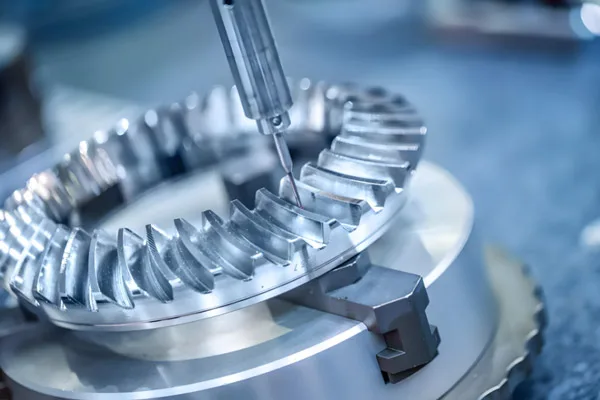
Aerospace cnc machining parts
Overcoming Challenges in CNC Machining of Composites
Despite its advantages, CNC machining of composites presents challenges such as fiber pull-out, delamination, and tool wear. Addressing these issues involves:
- Using sharp, appropriate tools designed for composites.
- Implementing proper machining strategies, such as climb milling.
- Maintaining optimal cutting parameters.
- Employing advanced CNC machines with high stability and rigidity.
Future Trends and Innovations
Advancements in CNC technology continue to enhance the capabilities of composite machining:
- Automated Tool Changers: Enable quick swapping of tools for multi-step processes.
- 5-Axis Machining: Allows for greater flexibility and access to complex geometries.
- Smart Sensors and Monitoring: Real-time feedback ensures quality control and process optimization.
- Hybrid Machining Processes: Combining CNC with additive manufacturing for more complex assemblies.
Conclusion
CNC machining has become an indispensable tool in the development of high-performance composites for aerospace prototypes. Its ability to produce precise, complex, and repeatable components accelerates innovation and reduces development costs. As aerospace demands continue to grow for lighter, stronger, and more efficient structures, CNC machining will remain at the forefront, enabling engineers to push the boundaries of what’s possible with advanced composite materials. Embracing these technologies ensures that the aerospace industry remains competitive and capable of meeting the challenges of tomorrow.