
Polypropylene (PP) has gained significant attention in the world of additive manufacturing due to its excellent chemical resistance, durability, flexibility, and cost-effectiveness. As an engineer venturing into 3D printing with polypropylene, understanding the unique properties of this thermoplastic, along with optimal process parameters and material handling techniques, is essential for successful fabrication. This comprehensive guide aims to provide an in-depth overview of 3D printing with polypropylene, covering material characteristics, suitable 3D printing methods, optimal settings, and critical process parameters.
Understanding Polypropylene (PP): Material Overview
Polypropylene is a versatile thermoplastic polymer belonging to the polyolefin family. It is characterized by:
- Chemical Resistance: Highly resistant to acids, bases, and many solvents.
- Mechanical Properties: Good fatigue resistance, impact strength, and flexibility.
- Thermal Properties: Melting point around 130°C–171°C; relatively low melting temperature compared to other engineering plastics.
- Lightweight and Cost-Effective: Offers an excellent strength-to-weight ratio at an affordable price point.
- Ease of Processing: Can be processed via extrusion, injection molding, and increasingly through 3D printing.
Despite its numerous advantages, polypropylene presents specific challenges in 3D printing, primarily due to its high shrinkage rate, warping tendencies, and poor adhesion to build plates. Overcoming these hurdles requires tailored approaches and precise control of printing parameters.
3D Printing Techniques Suitable for Polypropylene
- Fused Deposition Modeling (FDM/FFF): This is the most common method for printing with polypropylene. It involves extruding thermoplastic filament layer by layer.
- Selective Laser Sintering (SLS): While less common, SLS can process polypropylene powders, offering better part stability and minimal warping.
- Other Techniques: Methods like multi-jet fusion and binder jetting are less typical but can be explored for specific applications.
For most engineers, FDM/FFF remains the primary method due to equipment accessibility and material availability.
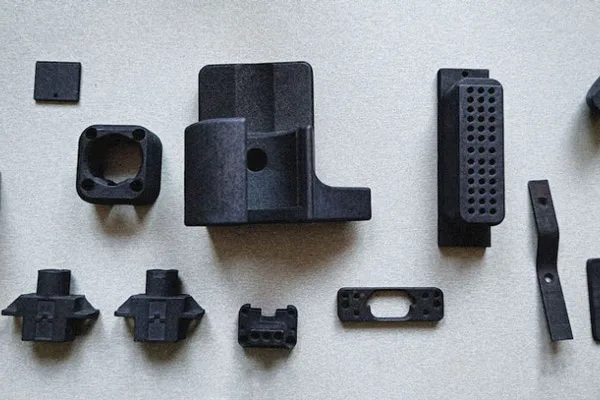
SLS parts
Material Preparation and Filament Considerations
Filament Quality: Use high-quality, consistent filament with a diameter of 1.75mm or 2.85mm. Ensure proper storage to prevent moisture absorption, which can cause printing defects.
Drying: Polypropylene filament is hygroscopic. Pre-drying at 60°C–80°C for several hours is recommended to eliminate moisture, which can lead to bubbling and poor layer adhesion.
Color Additives and Fillers: Be cautious with additives; they can affect melting behavior and adhesion.
Optimal 3D Printing Settings for Polypropylene
Achieving optimal print quality with polypropylene requires fine-tuning several key parameters:
1. Nozzle Temperature: Typically between 220°C and 250°C. Start at 230°C and adjust based on flow and adhesion.
2. Bed Temperature: A heated bed set to 80°C–100°C helps reduce warping and improves adhesion. Use an aluminum or build plate with good thermal conductivity.
3. Print Speed: Moderate speeds of 30–50 mm/sec are recommended to allow proper layer bonding and reduce warping.
4. Layer Height: Use layer heights of 0.1–0.2 mm for a balance between detail and print time.
5. Cooling: Minimize or turn off part cooling fans, as rapid cooling can cause warping and poor layer adhesion.
6. Adhesion Aids: Use adhesion solutions like PEI sheets, or apply a thin layer of ABS slurry, or use a brim or raft to improve bed adhesion.
Critical Process Parameters and Considerations
Build Chamber Environment: A controlled, enclosed chamber with consistent temperature reduces warping and cracking.
Print Orientation: Position parts to minimize overhangs and support requirements, reducing warping risks.
Layer Bonding: Ensure proper extrusion and temperature settings for good interlayer adhesion, critical for mechanical strength.
Post-Processing: Parts can be annealed at around 100°C–120°C to improve dimensional stability and mechanical properties.
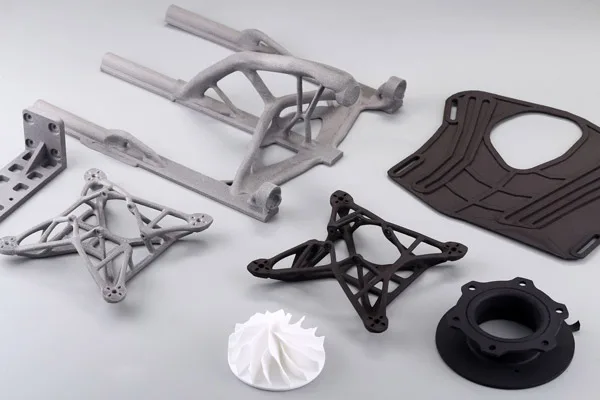
3D Printing Polypropylene parts
Troubleshooting Common Issues
|
Issue |
Cause |
Solution |
| Warping/Cracking | Rapid cooling, insufficient bed adhesion | Increase bed temperature, use adhesion aids, enclose the build chamber |
| Poor Layer Adhesion | Incorrect temperature, moisture in filament | Increase nozzle temperature, dry filament thoroughly |
| Surface Roughness | Excessive cooling, improper settings | Reduce cooling fan speed, optimize print speed and temperature |
Applications of 3D Printed Polypropylene
Prototyping: Functional prototypes for chemical, automotive, and consumer products.
Custom Components: Chemical tanks, piping, and containers due to chemical resistance.
Medical Devices: Non-sterile, durable, and lightweight parts.
Educational Models: Cost-effective and versatile for teaching purposes.
Conclusion
Polypropylene presents a promising yet challenging material for 3D printing. Success hinges on understanding its thermal and mechanical properties and meticulously adjusting printing parameters to mitigate warping and adhesion issues. With proper preparation and process control, engineers can leverage polypropylene’s advantages for creating durable, chemical-resistant, and lightweight parts. As technology advances, ongoing research and development will continue to expand polypropylene’s role in additive manufacturing, opening new horizons for innovative applications.