
Additive manufacturing has rapidly evolved from a tool primarily used for rapid prototyping to a sophisticated production method capable of creating highly functional, durable, and complex parts. At the heart of this transformation lies the development and adoption of advanced high-performance materials—materials engineered to withstand extreme conditions, deliver exceptional strength, and offer specialized functionalities. From aerospace components to medical implants, these materials are redefining the possibilities of what 3D printing can achieve. In this comprehensive guide, we delve into the world of high-value 3D printing materials, exploring their unique properties, applications, and the innovations propelling this exciting field forward.
High-Performance Thermoplastics
PEEK (Polyether Ether Ketone): PEEK is a semi-crystalline thermoplastic known for its outstanding mechanical properties and exceptional chemical resistance. It maintains its strength and stability at high temperatures, with continuous service temperatures reaching up to 250°C (482°F). Its high stiffness, low creep, and excellent wear resistance make it ideal for demanding environments such as aerospace, medical implants, and automotive parts. PEEK is also biocompatible, making it suitable for medical applications like surgical tools and implants.
Ultem (Polyetherimide): Ultem is a high-temperature thermoplastic that offers a combination of strength, stiffness, and flame retardance. It features a glass transition temperature around 217°C (423°F) and exhibits excellent electrical insulation properties. Its resistance to chemicals, hydrolysis, and high heat makes it a popular choice for aerospace components, electrical housings, and medical devices requiring sterilization.
Nylon (Polyamide) Variants: Nylon 12 and Nylon 11 are among the most utilized nylon-based materials in 3D printing. They are characterized by their toughness, flexibility, and chemical resistance. Nylon parts are often used in functional prototypes, tooling, and end-use components that require impact resistance and wear durability. Nylon’s low friction coefficient and ability to absorb shocks make it suitable for moving parts and mechanical assemblies.
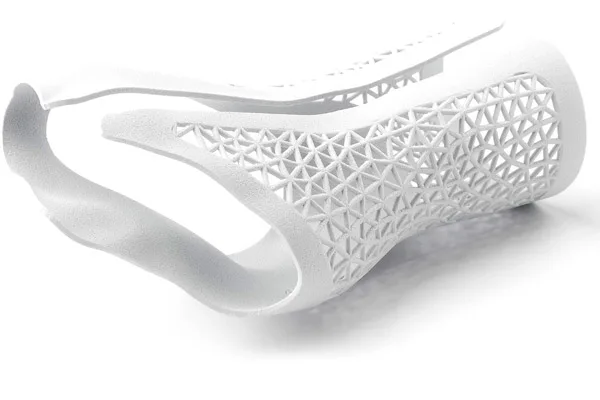
Nylon PA12
Composite Materials
Carbon Fiber-Reinforced Filaments: These materials combine a thermoplastic matrix with chopped or continuous carbon fibers, significantly enhancing mechanical properties like stiffness, tensile strength, and dimensional stability. Carbon fiber composites are lightweight yet extremely strong, making them ideal for aerospace structural components, high-performance sporting goods, and automotive interior parts. The fibers improve thermal stability and reduce warping during printing.
Glass Fiber-Reinforced Filaments: Glass fibers provide a cost-effective way to increase the strength, rigidity, and heat resistance of thermoplastics. Parts printed with these composites exhibit improved structural integrity and dimensional accuracy, suitable for functional prototypes and tooling applications.
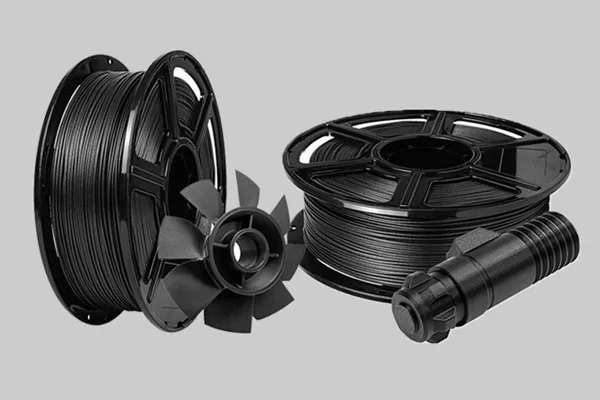
Carbon fiber composite
Elastomers and Flexible Materials
Thermoplastic Polyurethanes (TPUs): TPUs are elastomeric materials known for their high elasticity, abrasion resistance, and chemical stability. They can stretch significantly without tearing and recover their shape rapidly, making them perfect for flexible joints, seals, wearable devices, and impact-absorbing parts. Their wide hardness range allows for customization from soft, rubber-like materials to more rigid compositions.
Rubber-like Resins: These are specially formulated flexible resins used in stereolithography (SLA) or digital light processing (DLP) 3D printers. They produce soft, elastic parts that mimic rubber, suitable for grips, soft-touch surfaces, or impact mitigation components.
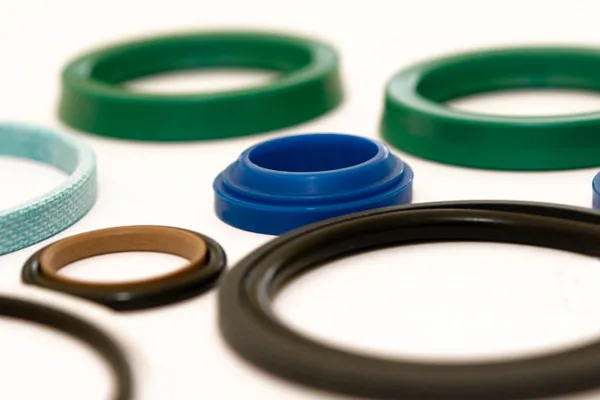
TPU 95 O-rings
Metal and Ceramic Materials
Metals: Using powder-bed fusion processes such as Direct Metal Laser Sintering (DMLS) or Selective Laser Melting (SLM), metallic materials enable the production of highly durable, complex metal parts. These materials are vital in aerospace, medical implants, tooling, and industrial applications requiring high strength, thermal stability, and corrosion resistance.
Ceramics: Ceramic materials like alumina or zirconia are used in specialized 3D printing processes for parts that require high hardness, wear resistance, and thermal stability. They are employed in dental restorations, electronics, and high-temperature components.
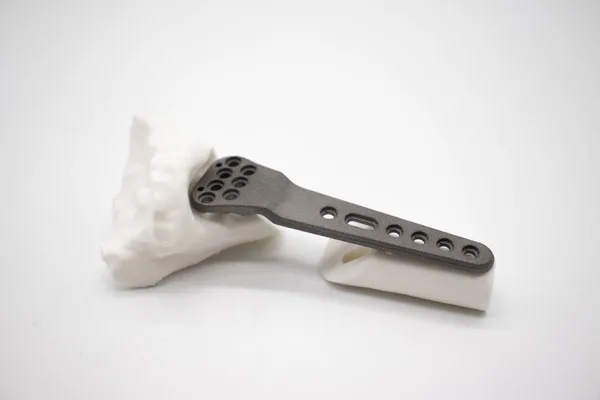
Distal radius plate
Challenges and Bottlenecks
Despite the rapid advancements, several challenges and bottlenecks hinder the widespread adoption and further development of high-performance materials in 3D printing:
Processing Difficulties:
Many high-performance materials, such as PEEK and Ultem, require extremely high extrusion or sintering temperatures, specialized equipment, and controlled environments. This increases costs and limits accessibility.
Material Cost and Availability:
Advanced materials like carbon fiber composites or high-grade metals are often expensive and may have limited suppliers, impacting scalability and affordability.
Limited Equipment Compatibility:
Not all 3D printers are capable of processing high-performance materials, necessitating significant investment in specialized machinery, which can be a barrier for smaller or less-established facilities.
Post-Processing Complexity:
Achieving desired surface finishes, dimensional accuracy, and mechanical properties often requires complex post-processing steps, adding time and cost.
Material Certification and Standardization:
Ensuring compliance with industry standards and obtaining certifications for critical applications (medical, aerospace) remain lengthy and complex processes.
Material Degradation and Stability:
Some high-performance polymers can degrade over time or under specific environmental conditions, affecting the longevity and reliability of printed parts.
Environmental Impact:
The production, use, and disposal of high-performance materials can pose environmental challenges, emphasizing the need for sustainable alternatives.
Future Trends and Research Directions
The future of high-performance materials in 3D printing is poised for exciting innovations:
Smart and Functional Materials: Integration of sensors, self-healing capabilities, and shape-memory effects into printable materials will enable adaptive and maintenance-free parts.
Multi-Material and Multi-Functional Printing: Combining different materials in a single build allows for parts with embedded electronics, varied mechanical properties, or complex geometries with integrated functionalities.
AI-Driven Material Optimization: Artificial Intelligence and machine learning will play pivotal roles in designing new formulations, optimizing printing parameters, and predicting performance, accelerating material development.
Sustainable and Eco-Friendly Materials: Advancements in biodegradable composites, recyclable thermoplastics, and bio-based high-performance materials will address environmental impacts.
High-Precision and Multi-Scale Printing: Technologies enabling finer resolutions and multi-scale structures will open new horizons in microfabrication, electronics, and biomedical devices.
Summary
High-value 3D printing materials encompass a broad spectrum of advanced thermoplastics, composites, elastomers, metals, and ceramics. Each material is engineered to meet specific performance criteria, such as high temperature resistance, mechanical strength, chemical stability, or flexibility. Their tailored properties enable the creation of functional, durable, and complex parts across diverse industries, pushing the boundaries of what is possible with additive manufacturing.