
In the realm of plastic manufacturing, flexible materials are increasingly in demand across various industries, including medical devices, consumer electronics, automotive, and footwear. These materials enable the production of components that require elasticity, resilience, and comfort, such as seals, gaskets, grips, and wearable devices. Two prominent materials used in flexible injection molding are Liquid Silicone Rubber (LSR) and Thermoplastic Elastomers (TPE). While both offer flexibility, they differ significantly in their properties, processing methods, applications, and performance characteristics.
This article provides an in-depth comparison of LSR and TPE, exploring their material properties, manufacturing processes, advantages, limitations, and ideal use cases to help engineers, designers, and manufacturers make informed decisions for their projects.
1. Understanding LSR and TPE
Liquid Silicone Rubber (LSR)
LSR is a high-purity, two-part silicone material that is processed in its liquid form and cured via heat (usually platinum-catalyzed). It is known for its exceptional thermal stability, biocompatibility, and chemical resistance.
Properties:
Excellent flexibility and elasticity.
High-temperature resistance.
Outstanding chemical and UV resistance.
Biocompatible and FDA-compliant, making it suitable for medical applications.
Very good dielectric properties.
Low compression set, maintaining elasticity over repeated cycles.
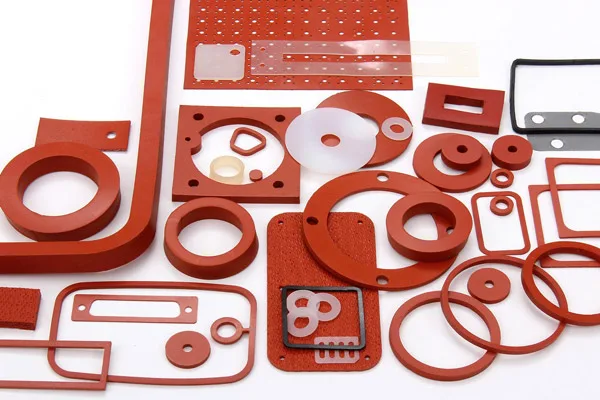
Silicone gaskets
Thermoplastic Elastomers (TPE)
TPEs are a class of thermoplastic polymers that combine the elastic properties of rubber with the processing advantages of thermoplastics. They can be melted and reprocessed multiple times.
Properties:
Wide range of hardness levels.
Good flexibility and elasticity, but generally lower than LSR at high temperatures.
Recyclable and recyclable-friendly.
Easier and faster processing via standard injection molding techniques.
Good chemical resistance depending on the specific formulation.
Available in various formulations tailored for specific properties.
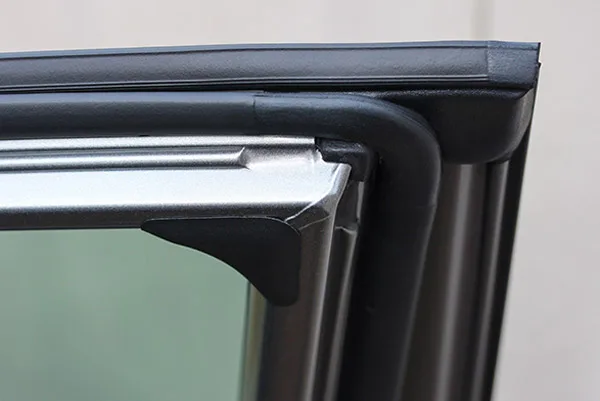
Automotive door seal
2. Processing Techniques and Manufacturing Considerations
LSR Processing
LSR is processed through two-shot or transfer injection molding using specialized equipment designed for silicone. It involves feeding two liquid components into a heated mold cavity, where they cure into a solid elastomer.
Advantages:
High precision and consistent quality.
Capable of producing intricate geometries.
Suitable for high-volume production with fast cycle times once the mold is made.
Limitations:
Requires specialized equipment and tooling, leading to higher initial costs.
Less flexible in terms of material customization after molding.
Longer lead times for mold design and fabrication.
TPE Processing
TPEs are processed using conventional injection molding machines. They are heated to their melting point, injected into molds, and cooled rapidly.
Advantages:
Lower tooling costs compared to LSR.
Faster processing cycles.
Easier to integrate into existing manufacturing lines.
Recyclable, enabling sustainable manufacturing.
Limitations:
Slightly lower thermal stability compared to LSR.
May require multiple formulations to achieve desired properties.
3. Mechanical and Physical Properties Comparison
|
Property |
LSR |
TPE |
| Elasticity & Flexibility | Very high, excellent rebound | Good, but slightly less than LSR |
| Temperature Resistance | Up to 200°C or higher | Typically up to 100-140°C |
| Chemical Resistance | Exceptional | Good, formulation-dependent |
| UV & Weather Resistance | Excellent | Good, varies with formulation |
| Biocompatibility & Medical Use | Superior, FDA-approved for medical | Varies; some formulations are medical-grade |
| Processing Ease | Requires specialized equipment | Compatible with standard injection molding |
4. Performance and Application Suitability
LSR Applications:
Medical devices such as seals, catheters, and prosthetics.
Automotive seals and gaskets requiring high-temperature resistance.
Consumer electronics for wearable devices and flexible housings.
Food-grade applications due to its non-toxicity and inertness.
TPE Applications:
Consumer goods such as grips, handles, and footwear.
Automotive parts like door seals and trim components.
Medical devices, especially where cost-effective production is needed.
Electronic enclosures requiring flexibility and aesthetic finishes.
5. Cost Considerations
Material Cost: LSR tends to be more expensive per unit volume due to raw material costs and specialized processing equipment. TPEs are generally more economical, especially for medium to large production runs.
Tooling & Equipment: Molds for LSR are more complex and costly, requiring precise temperature control and specialized machinery. TPE molds are simpler and compatible with standard injection molding equipment.
Production Volume: LSR is ideal for high-volume production where consistent quality and long-term durability justify the higher initial investment. TPE offers flexibility and cost advantages in low to medium volumes or rapid prototyping.
6. Environmental and Sustainability Aspects
Recyclability: TPEs are generally recyclable, supporting sustainable manufacturing practices.
Environmental Resistance: LSR’s resistance to UV, ozone, and chemicals ensures long-lasting performance in harsh environments.
7. Choosing Between LSR and TPE
The decision hinges on specific project requirements:
Opt for LSR when:
High-temperature resistance is essential.
Medical-grade, biocompatibility, or food contact is required.
Long-term durability and chemical resistance are paramount.
High-volume production justifies the initial tooling investment.
Opt for TPE when:
Lower cost and faster turnaround are priorities.
Recyclability and environmental sustainability matter.
The application involves less demanding temperature ranges.
Flexibility in design modifications and prototyping is needed.
Conclusion
Both Liquid Silicone Rubber (LSR) and Thermoplastic Elastomers (TPE) are versatile materials that enable the production of flexible, durable, and high-performance components through injection molding. While LSR excels in applications demanding exceptional thermal stability, chemical resistance, and biocompatibility, TPE offers cost-effective, recyclable, and easily processed solutions suitable for a broad range of consumer and industrial applications.
Understanding the specific requirements of your project—such as operating environment, budget, volume, and performance needs—is crucial in selecting the optimal material. Collaborating with experienced material suppliers and manufacturing experts can further ensure that the chosen solution aligns perfectly with your product goals, ultimately delivering reliable, high-quality flexible components.