
Blow molding is a highly versatile and efficient plastic manufacturing process that plays a crucial role in producing a wide array of medical products, especially medical bottles. These bottles are integral components in healthcare settings, used for storing and dispensing liquids such as medications, saline solutions, antiseptics, and other sterile fluids. The application of blow molding in manufacturing medical bottles combines precision, durability, and sterilization compatibility, ensuring that healthcare providers and patients receive safe and reliable containers for their needs.
Overview of Blow Molding Technology
Blow molding involves shaping thermoplastic materials into hollow objects by inflating a heated plastic parison (a preform or tube) inside a mold using compressed air. This process allows for the high volume production of uniform, complex shaped bottles with consistent wall thickness and surface finish. There are different types of blow molding techniques – such as extrusion blow molding, injection blow molding, and stretch blow molding – each suitable for specific applications within the medical industry.
Core Blow Molding Processes and Their Medical Applications
In the medical field, three main blow molding processes are used, each chosen based on the specific needs of the product.
1. Injection Blow Molding (IBM)
Injection Blow Molding combines injection molding and blow molding into a two-step process. It is the mainstream technology for manufacturing high-precision, small-sized medical containers. The process starts by accurately molding a preform with a fully formed neck finish in an injection station. This preform is then transferred to a blow molding station, where it is inflated with compressed air to take the final shape of the bottle.
Medical Application Advantages:
High Precision and Consistency: The neck finish is dimensionally accurate, ensuring an excellent fit and superior seal with components like droppers and child-resistant caps.
No Flash or Scrap: The process generates virtually no waste material, and the bottles are free of pinch-off seams, resulting in a high surface finish. This eliminates post-processing steps and potential areas for contamination.
Typical Applications: Primarily used for small-volume liquid pharmaceutical packaging ranging from 5 to 30 milliliters. Common examples include eye drop bottles, nasal spray bottles, and oral liquid medicines requiring precise dosing.
2. Injection Stretch Blow Molding (ISBM)
Injection Stretch Blow Molding adds an axial stretch step before the final blow. This process starts with the injection of a pre-form, which, after being temperature conditioned, is stretched axially by a stretch bar while simultaneously being radially inflated with high-pressure air.
Medical Application Advantages:
High Transparency and Aesthetics: Produces containers with excellent, glass-like clarity, which is beneficial for observing the state of the liquid medication.
Superior Mechanical Properties: The biaxial stretching orients the polymer molecules, significantly enhancing the bottle’s strength, impact resistance, and barrier properties.
Typical Applications: Particularly well-suited for larger, transparent bottles made from PET (Polyethylene Terephthalate), such as syrup bottles, large-volume oral liquid bottles, and vitamin or nutritional supplement containers.
3. Extrusion Blow Molding (EBM)
This is a more traditional process in which a continuous tube of molten plastic, called a parison, is extruded vertically. The mold is then closed around the joint and air is blown into it to inflate the plastic to match the mold outline.
Application Characteristics:
EBM devices and tools are simpler and less expensive, making them suitable for large containers or those with irregular, complex shapes that are difficult to implement with injection-based methods. However, its disadvantages include less precise neck finishes and potential wall thickness variations due to gravity’s effect on the parison. Consequently, its applications in modern sterile medical packaging with high sealing requirements are often superseded by IBM and ISBM. However, it is still suitable for certain externally used lotions or disinfectant packages, where the accuracy requirements are slightly lower.
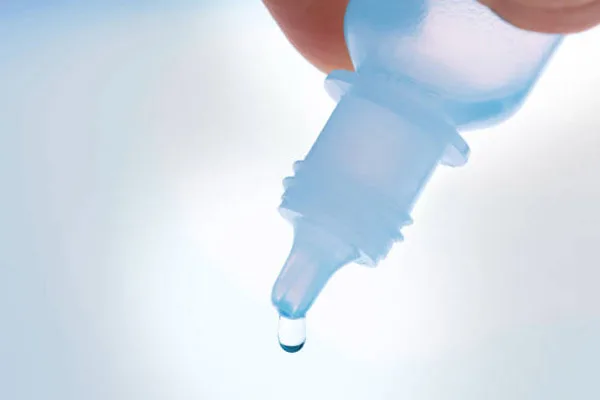
Eye drop bottles
Technical Advantages of Blow Molding in the Medical
SectorSterility Assurance: A core strength of modern medical blow molding is its ability to integrate with aseptic manufacturing processes. In Blow-Fill-Seal (BFS) technology, container formation, filling with the drug, and sealing are all completed in one continuous operation within a sterile machine. The polymer is sterile upon high-temperature extrusion, and sterile air is used for blowing, minimizing human intervention and drastically reducing the risk of microbial and particulate contamination. Furthermore, advanced ISBM lines can operate within ISO Class 7 (10,000 particle count) or cleaner cleanrooms, enabling “no-touch” production.
High Precision and Consistency: Medical bottles demand tight tolerances on neck finish dimensions, wall thickness distribution, and volume accuracy. IBM and ISBM processes excel at controlling these parameters. The injection phase ensures precise molding of threads and neck features for sealing integrity, while the blowing phase, with precisely controlled temperature and pressure, guarantees uniform wall thickness, eliminating weak points and ensuring consistent mechanical and barrier performance.
Material Versatility: Blow molding can process a wide range of medical-grade plastics tailored to different drug requirements.
- High-Density Polyethylene (HDPE): Offers excellent moisture vapor barrier, making it the material of choice for solid capsules and tablets, often produced via IBM.
- Polypropylene (PP): Provides good heat resistance, allowing for autoclave sterilization, and excellent chemical resistance.
- Polyethylene Terephthalate (PET): Boasts high clarity and better oxygen barrier than HDPE, suitable for oxygen-sensitive or visually appealing liquid formulations.
- Cyclic Olefin Copolymers/Polymers (COC/COP): Exhibit high transparency, low protein adsorption, and superior moisture and oxygen barriers, making them ideal for high-value biologics and injectable formulations.
Design Flexibility and Functional Integration: Blow molding allows for complex shapes that enhance safety and the patient experience.
Material Science and Technological Innovation
Multi-layer Co-extrusion technology combines the properties of different materials by precisely controlling the simultaneous extrusion of multiple layers, achieving performance unattainable with a single material. A classical example is the PE-EVOH-PE three-layer structure. Here, the core EVOH (Ethylene Vinyl Alcohol) layer acts as an exceptional oxygen barrier, while the inner and outer PE (Polyethylene) layers provide moisture resistance and compatibility with the drug. These high-barrier multi-layer bottles are ideal for oxygen-sensitive drugs requiring long-term storage or for packaging potent active pharmaceutical ingredients (APIs) that might otherwise permeate a standard container.
The core principle of material selection is to match the protection needs of the drug. Hygroscopic solid drugs are best protected by HDPE or PP with their very low Water Vapor Transmission Rates (WVTR). For oxidation-prone drugs, the Oxygen Transmission Rate (OTR) of the material is critical; PET performs better than HDPE in this respect, while high-barrier materials such as EVOH provide ultimate protection.
Conclusion
Blow molding techniques, particularly injection blow molding and injection stretch blow molding, have become integral core technologies in modern medical and pharmaceutical packaging. Its excellence in sterility assurance, dimensional accuracy, material adaptability and design flexibility is unsurpassed. From simple eye drop bottles to complex pre-filled containers for biologics, blow molding plays a critical role in delivering safe and effective therapies.
As biopharmaceuticals advance, safety requirements tighten and environmental pressures mount, blow molding technology is evolving toward cleaner, smarter and more sustainable practices. By adopting multilayer high barrier materials, enabling fully automated production within cleanrooms, and embracing recyclable designs and bio-based materials, this technology not only safeguards drug efficacy and patient safety, but also significantly contributes to the sustainability of the healthcare industry. Looking ahead, the continued convergence of materials science and manufacturing innovation promises to unlock even broader applications of blow molding in precision medicine and personalized drug delivery.