
In the modern world of manufacturing, the demand for highly complex, precise and aesthetically superior parts is at an all-time high. Industries such as aerospace, medical, automotive and mold making are constantly pushing the boundaries of what is possible. At the heart of this manufacturing revolution lies 5-axis CNC machining.
While it sounds like a simple upgrade from a standard milling machine, 5-axis technology represents a fundamental shift in how parts are designed and produced. This article will explore what 5-axis machining is, how it differs from its 3-axis and 4-axis counterparts, and the distinct advantages and disadvantages that come with this advanced technology.
What is 5-Axis CNC Machining?
5-axis CNC machining refers to a manufacturing process where a cutting tool moves continuously across five different axes simultaneously. This allows the tool to approach the workpiece from any direction.
To understand this, we must first understand the concept of “axes.” In CNC machining, an axis refers to a direction of movement. Standard machining involves three linear axes:
- X-axis (Left to Right)
- Y-axis (Front to Back)
- Z-axis (Up and Down)
In 5-axis machining, two rotational axes are added to these three linear ones. The specific names of these rotational axes (A, B, and C) depend on the machine’s configuration, but they generally rotate around the linear axes:
- A-axis: Rotation around the X-axis.
- B-axis: Rotation around the Y-axis.
- C-axis: Rotation around the Z-axis.
A true 5-axis CNC machine can use any combination of these five axes simultaneously in a single operation. This simultaneous movement allows for the creation of incredibly complex shapes, such as turbine blades, impellers and medical implants, with a high degree of precision and surface finish.
The Two Main Types of 5-Axis Machines
There are two primary configurations for 5-axis machining centers:
Trunnion-Style Machines: In this design, the table (where the workpiece is mounted) rotates. The table typically sits on a trunnion that provides the rotational (A and C) movements. This is the most common configuration for machining smaller, complex parts.
Swivel-Head Machines: In this design, the machine head tilts and rotates, while the table remains stationary. This is ideal for very large, heavy workpieces that would be difficult or impossible to rotate, such as aerospace structural components.
Differences: 3-Axis, 4-Axis, and 5-Axis Machining
|
Feature |
3-Axis |
4-Axis |
5-Axis |
| Movement | Moves in X, Y, and Z linear directions only. | Moves in X, Y, and Z, plus one rotational axis. | Moves in X, Y, Z, plus two rotational axes simultaneously. |
| Process | Workpiece is fixed. Tool moves along three axes. Requires manual repositioning to machine different sides. | Adds a rotary table to a 3-axis mill. The part rotates to allow access to different sides without manual repositioning. Often used for indexing. | Tool and/or workpiece move in complex paths at the same time, maintaining the optimal tool angle with respect to the cutting surface. |
| Best For | Simple geometries, flat surfaces, prismatic parts, drilling, slotting. | Cylindrical parts, helical features, cams, parts requiring machining on multiple faces. | Complex sculpted surfaces, deep cavities, aerospace blisks, turbine blades, medical implants, complex mold cores. |
| Maintenance | Simple and low-cost; standard wear parts; repairs can be done in-house; minimal downtime. | Rotary unit adds complexity; requires regular cleaning and calibration; moderate expertise needed. | Highly complex kinematics; requires specialized technicians; frequent calibration essential; expensive replacement parts. |
| Tool Wear | Higher wear due to long tool overhangs and tip cutting; chatter common in deep cavities. | Improved tool life due to part rotation; better chip evacuation reduces heat buildup. | Optimal tool life; uses shorter, rigid tools; constant optimal cutting angle minimizes stress and wear. |
Advantages of 5-Axis CNC Machining
Enhanced Geometric Flexibility:
The dual rotational axes allow for complex shapes and intricate geometries that would be difficult or impossible with 3- or 4-axis machines.
Reduced Setup Time:
Machining complex parts in a single setup minimizes repositioning, decreasing production time and reducing the risk of errors caused by multiple setups.
Improved Surface Finish and Accuracy:
Continuous tool contact from multiple angles results in smoother surfaces and higher precision, especially on complex contours.
Increased Efficiency for Complex Parts:
Capable of machining complex features in fewer steps, leading to faster production cycles and lower costs over time.
Better Access to Difficult Areas:
The ability to approach from different angles makes it easier to machine hard-to-reach features.
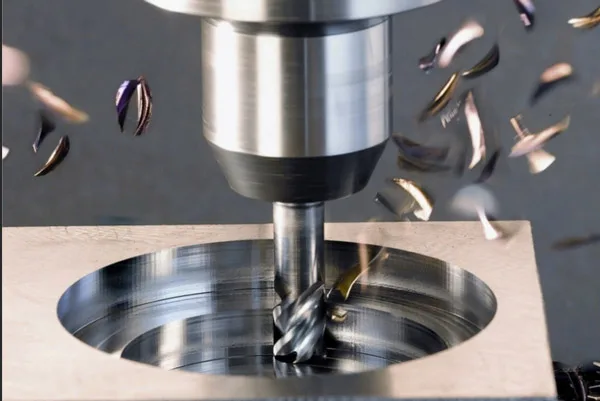
5 axis cnc machines
Disadvantages of 5-Axis CNC Machining
Higher Initial Investment:
5-axis machines are more expensive to purchase and maintain compared to 3- or 4-axis counterparts.
Complex Programming:
Programming 5-axis machines requires advanced skills and specialized CAM software, which can increase setup time and training costs.
Increased Maintenance and Calibration:
The additional axes and complexity mean more potential points of failure and higher maintenance requirements.
Limited Accessibility for Small Workshops:
Due to cost and complexity, smaller shops may find it challenging to justify the investment unless they regularly produce complex parts.
Applications of 5-Axis CNC Machining Across Industries
Aerospace Industry
In aerospace, 5-axis CNC machining is essential for the production of highly complex and precise components such as turbine blades, combustion chambers and lightweight structural components with intricate geometries. It also enables rapid prototyping of new designs, allowing manufacturers to efficiently and accurately develop and test advanced aerospace technologies.
Automotive Industry
The automotive division uses 5-axis machining to create detailed engine components, performance parts and custom-designed elements with complex shapes. This technology streamlines the production process, reduces the need for multiple setups and ensures high accuracy, ultimately improving the quality and performance of automotive parts.
Medical Industry
In the medical field, 5-axis CNC machining is essential for the manufacture of precise implants, prosthetics, surgical instruments and dental components. Its ability to produce highly detailed and complex geometries ensures biocompatibility, functionality and customization to individual patient needs.
Electronics and Consumer Products
The electronics industry benefits from 5-axis machining by producing complex housing, enclosures and internal cooling channels with high accuracy. This ensures the durability, functionality and aesthetic quality of consumer electronic devices.
Energy Sector
In the energy industry, 5-axis CNC machining is employed to manufacture complex components for turbines, valves and drilling equipment. Its precision and ability to handle difficult geometries are critical for producing reliable, high-performance energy devices.
Conclusion
5-Axis CNC machining represents a major leap forward in manufacturing technology, providing unmatched flexibility, efficiency and precision for complex part production. While it requires substantial investment and expertise, for industries where high-quality, intricate components are essential, its advantages often outweigh its drawbacks. Understanding the differences between 3-, 4-, and 5-axis machining helps manufacturers choose the appropriate technology to meet their specific production needs.