
In the realm of sealing solutions for outdoor and underwater applications, Liquid Silicone Rubber (LSR) has established itself as the material of choice among engineers, manufacturers, and industry experts. Its unique combination of properties provides unparalleled performance, durability and reliability in some of the most challenging environments. This comprehensive article explores the reasons behind the widespread preference for liquid silicone rubber in sealing outdoor and underwater devices and highlights its advantages over other materials.
Understanding Liquid Silicone Rubber (LSR)
Liquid Silicone Rubber is a high-performance elastomer that is processed in its liquid form before being cured into a flexible, rubber-like solid. Its manufacturing process involves injection molding, which allows for accurate and complex part production with excellent consistency. Once cured, the LSR exhibits a wide range of properties that make it ideal for sealing applications, especially where environmental resistance is paramount.
Superior Environmental Resistance
One of the primary reasons for the preference of LSR for outdoor and underwater applications is its exceptional resistance to environmental factors:
- UV Resistance: LSR resists degradation caused by ultraviolet radiation from the sun, preventing cracking, discoloration, and loss of elasticity over time.
- Ozone Resistance: Its chemical stability ensures that exposure to ozone does not cause deterioration, which is critical for outdoor devices exposed to high ozone levels.
- Temperature Stability: LSR maintains its flexibility and sealing integrity across a broad temperature spectrum, typically from -55°C to +300°C, allowing devices to operate reliably in extreme hot or cold environments.
- Water and Moisture Resistance: Its non-porous, inert nature makes it highly resistant to water ingress, making it ideal for underwater and moisture-prone environments.
Excellent Chemical and Corrosion Resistance
LSR’s inert nature means it does not react with most chemicals, oils, or salts. This resistance is critical for underwater equipment exposed to brine, and outdoor equipment exposed to a variety of environmental chemicals. It prevents corrosion of internal components and extends the life of the device.
Flexibility and Elasticity
The flexibility of the LSR ensures a tight seal even under mechanical stress or motion. Its elastic nature allows it to accommodate expansion, contraction and vibration without losing the integrity of the seal. This elasticity is crucial for dynamic environments where motion or pressure fluctuations are common.
Durability and Long-Term Performance
LSR’s durability ensures that seals do not degrade or crack over time. Its resistance to weathering, aging and mechanical wear results in long-lasting performance, reducing maintenance costs and downtime for outdoor and underwater equipment.
Biocompatibility and Safety
For certain underwater applications, especially those related to medical, aquatic or food industry devices, biocompatibility is essential. LSR is FDA approved and biocompatible, making it safe for exposure to sensitive environments and materials.
Ease of Manufacturing and Design Flexibility
Liquid silicone rubber can be molded into complex shapes with high accuracy, enabling the design of intricate sealing geometries. Its processability allows for rapid prototyping and production, ensuring that custom seals can be manufactured efficiently to meet specific requirements.
Cost-Effectiveness
Although the initial cost of LSR components may be higher compared to some other materials, its longevity and low maintenance requirements make it a cost-effective solution over the lifetime of the device. Reducing replacement and repair costs is a significant benefit for manufacturers.
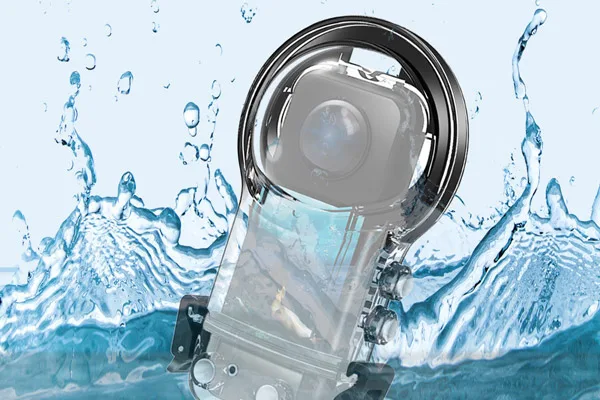
Silicone lens covers
Comparative Advantages Over Other Materials
While materials like EPDM, neoprene, or fluorocarbon rubbers are also used for sealing, LSR outperforms them in several key areas:
- Superior temperature resistance
- Better UV, ozone, and water resistance
- Greater design flexibility
- Longer service life
- Enhanced chemical inertness
Real-World Applications: Where LSR Seals the Deal
Underwater Imaging & Robotics: Housings for dive cameras, ROV (Remotely Operated Vehicle) cameras, and underwater LiDAR use LSR gaskets and lens seals to withstand high pressure and saltwater corrosion.
Outdoor Communications: 5G/Internet of Things (IoT) enclosures, antenna seals, and satellite communication devices rely on LSR for protection against rain, humidity, and thermal cycling.
Marine & Automotive Lighting: LED light bars on boats and vehicles use LSR seals for their superior UV and weather resistance, preventing moisture ingress that leads to condensation and “light drowning.”
Remote Monitoring & Sensing: Environmental sensors (for weather, pollution, agriculture) deployed in the field use LSR-sealed housings to protect their sensitive electronics for years without maintenance.
Conclusion
Liquid silicone rubber molding’s unique combination of environmental resistance, durability, flexibility and ease of manufacturing makes it the preferred choice for sealing outdoor and underwater equipment. Its ability to withstand harsh conditions while maintaining performance integrity ensures the device remains reliable, safe and long-lasting. As technological advances continue and the demand for robust sealing solutions grows, the role of LSR in protecting sensitive equipment in extreme environments is set to expand further, cementing its position as the material of choice in these challenging applications.