
In recent years, additive manufacturing has revolutionized the way industries approach production, prototyping, and custom component creation. Among the various 3D printing technologies, Multi Jet Fusion (MJF) has emerged as a leading method for producing high-quality, durable, and complex parts suitable for industrial applications. This comprehensive guide covers the essentials of MJF 3D printing.
What is MJF 3D Printing?
Multi Jet Fusion (MJF) is an innovative 3D printing technology developed by Hewlett-Packard (HP) that uses a powder bed fusion process. Unlike traditional manufacturing methods, MJF builds parts layer by layer by selectively applying a binding agent and then fusing the powder particles with infrared light. This process results in strong, detailed, and functional parts with excellent mechanical properties.
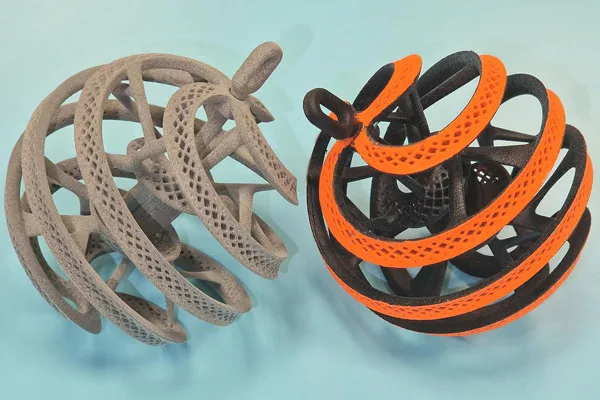
MJF parts
How Does MJF Work?
The MJF process involves several key steps:
1. Preparation: A thin layer of thermoplastic powder, typically nylon (PA12 or PA11), is spread across the build chamber.
2. Jetting of Agents: A print head jets a fusing agent onto the powder in the areas where the part is to be fused.
3. Infrared Fusion: Infrared energy passes over the powder bed, selectively heating and fusing the marked areas.
4. Layer-by-Layer Construction: The build platform lowers, and the process repeats until the entire part is formed.
5. Post-Processing: After printing, unsintered powder is removed, and parts may undergo additional finishing, such as dyeing, polishing, or surface treatment.
MJF Materials Selection
In the realm of additive manufacturing, material choice is crucial to achieving optimal part performance, durability, and cost-effectiveness. Multi Jet Fusion (MJF) technology primarily utilizes thermoplastic powders, with nylon-based materials being the most prominent. Understanding the properties of these materials and how to select the right one for your application is essential for success in production and prototyping.
Common MJF Materials
Nylon 12 (PA12)
- Properties: Nylon 12 is the most widely used MJF material due to its excellent balance of strength, flexibility, and chemical resistance. It exhibits high impact resistance and good dimensional stability.
- Applications: Functional prototypes, end-use parts, automotive components, consumer products, and medical devices.
- Advantages: Good mechanical properties, ease of dyeing for aesthetic purposes, and relatively low cost.
Nylon 11 (PA11)
- Properties: Derived from renewable castor oil, Nylon 11 offers superior flexibility, elongation at break, and chemical resistance. It also has lower moisture absorption compared to PA12.
- Applications: Flexible parts, seals, soft-touch components, and applications requiring higher chemical resistance.
- Advantages: Greater flexibility, UV resistance, and environmental sustainability.
Nylon 12 Carbon Fiber (PA12-CF)
- Properties: Reinforced with carbon fibers, this composite material boasts increased stiffness, dimensional stability, and strength.
- Applications: Structural components, load-bearing parts, and applications demanding higher mechanical performance.
- Advantages: Higher strength-to-weight ratio, improved thermal stability.
Other Specialized Materials
While nylon-based powders dominate, ongoing research and development are expanding available materials, including elastomers, composites, and high-performance thermoplastics for specific applications.
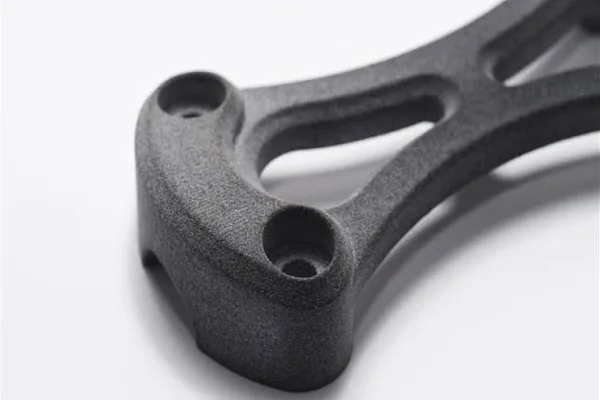
MJF Nylon PA 12
MJF Design: The Most Common Mistakes
Inadequate Wall Thickness:
Making walls too thin can lead to weak parts or dimensional inaccuracies, while excessively thick walls can waste material and increase costs.
Poor Part Orientation:
Not considering the optimal orientation can result in visible layer lines, poor surface finish, or increased support structures.
Ignoring Support-Free Design Principles:
Creating overhangs or features that require supports, which are difficult to remove and can damage the surface.
Neglecting Material Properties:
Failing to consider material-specific limitations, such as shrinkage or minimum feature sizes, can compromise part quality.
Lack of Tolerance Planning:
Ignoring the typical tolerances of MJF can result in parts that do not fit or function as intended.
MJF Surface Finishing
1. Cleaning: Remove excess powder from the surface, typically using air blasting, brushing, or ultrasonic cleaning to ensure the part is free of loose debris.
2. Curing: Expose parts to UV or heat curing to enhance mechanical properties, stabilize dimensions, and improve durability.
- Sanding or Polishing: To smooth surfaces and improve aesthetics.
- Vapor Smoothing: Using chemical vapors to achieve a glossy and smooth surface, though less common for MJF.
- Coating or Painting: Applying paints, primers, or protective coatings for aesthetics, corrosion resistance, or functional purposes.
4. Dyeing: Coloring parts uniformly or selectively for aesthetic or identification purposes.
5. Assembly and Joining: Combining MJF parts using adhesives, welding, or mechanical fastening to build complex assemblies.
6. Reinforcement: Adding inserts, metal components, or other reinforcements to improve strength or functionality.
7. Heat Treatment: Sometimes used to relieve internal stresses or enhance mechanical properties, depending on the material.
8. Sealing: Applying sealants or surface treatments to improve chemical resistance or waterproofing.
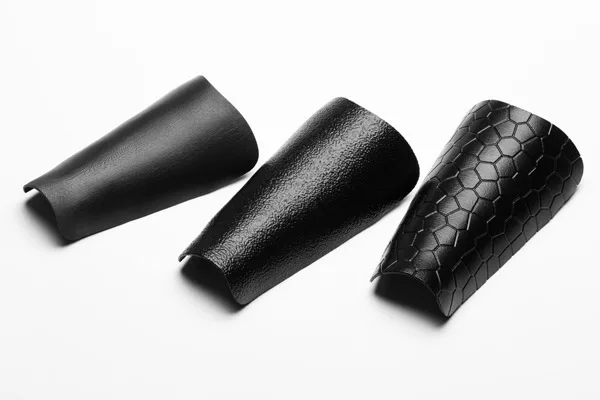
Vapor smoothing
When to Opt for MJF 3D Printing
- High-Volume Production: When you need to produce a large number of parts efficiently and cost-effectively, as MJF offers fast build times and scalable production.
- Complex Geometries and Detailed Features: If your design includes intricate geometries, fine details, or internal channels that would be difficult or costly to produce with traditional manufacturing methods.
- Functional Prototypes and End-Use Parts: When you require durable, mechanically robust parts for testing, validation, or final use, since MJF parts typically have good strength and surface finish.
- Consistent Quality and Tighter Tolerances: If your project demands consistent dimensional accuracy and surface quality across multiple parts.
- Rapid Iteration and Design Flexibility: When you need quick turnaround times for design iterations, MJF can produce parts faster than traditional methods.
- Cost-Effective Small to Medium Batches: For moderate production runs where tooling costs are prohibitive, MJF offers a good balance of cost and quality.
- Material Variety Needs: When your application benefits from a range of material options with different mechanical properties, as MJF supports multiple materials suited for various functional requirements.
Conclusion
Multi Jet Fusion delivers fast, accurate, and production-ready parts with excellent mechanical properties—making it ideal for complex geometries, low-to-medium volumes, and rapid design iteration. By choosing the right material, following smart design rules, and applying appropriate post-processing, manufacturers can achieve durable, cost-effective components without the expense of tooling. As the technology evolves, MJF continues to cement its place as a practical, scalable solution for modern industrial production.