
Plastic injection molding has become one of the most crucial and widely used manufacturing processes in the modern industrial landscape. Its ability to produce complex, high-quality components efficiently and on a large scale has revolutionized industries such as automotive, aerospace, consumer electronics, healthcare and packaging. The inherent advantages of this process significantly enhance the manufacturing workflow and elevate the quality standards of the final product. In this comprehensive article, we will explore in detail how plastic injection molding optimizes the manufacturing process and improves the overall quality of manufactured components.
1. Streamlining Manufacturing Processes
- High-Speed Production and Scalability: Plastic injection molding is renowned for its rapid cycle times. Once the mold is designed and fabricated, the process can produce hundreds or thousands of identical parts in a short time frame. This high-speed capability is essential to meet large volume production requirements efficiently. In addition, the process is highly scalable; Whether producing a few prototypes or millions of units, injection molding can accommodate various production scales with minimal modifications.
- Automation and Reduced Labor: Modern injection molding machines are equipped with advanced automation features, including robotic arms for part removal and material handling. This automation reduces labor costs and minimizes human error, leading to more consistent and predictable production runs. Automated systems also facilitate continuous operation, increasing throughput and reducing downtime.
- Integration with CAD/CAM Technologies: Injection molding seamlessly integrates with computer-aided design (CAD) and computer-aided manufacturing (CAM) tools. This integration enables rapid prototyping, design iterations, and mold fabrication, shortening product development cycles. It also ensures that the transition from design to production is smooth, reducing errors and delays.
2. Enhancing Manufacturing Precision and Consistency
Tight Tolerances and Dimensional Accuracy
Injection molding offers exceptional precision, capable of producing parts with tight tolerances—often within hundredths of a millimeter. This accuracy ensures that each component fits perfectly within assemblies and meets strict industry specifications. Consistency across large production runs is maintained through precise control of process parameters such as temperature, pressure, and cooling time.
Repeatability and Quality Control
Once a mold is created, it can produce identical parts with minimal variation. This repeatability is crucial for applications requiring high reliability, such as medical devices or automotive components. Modern injection molding machines incorporate sensors and feedback systems that monitor process parameters in real-time, allowing for immediate adjustments to maintain quality.
3. Facilitating Complex and Innovative Designs
- Design Flexibility: Injection molding allows for complex geometries and intricate features that are difficult or impossible to achieve with traditional manufacturing methods such as machining or casting. Features such as undercuts, threads, textured surfaces, and integrated assemblies can be incorporated directly into the mold design. This reduces secondary assembly steps, streamlines manufacturing and enhances the overall product design.
- Lightweight and Functional Parts: Advanced molding techniques enable the production of lightweight yet durable parts, which are essential for industries such as aerospace and automotive, where weight reduction is critical. Engineers can optimize the design for strength and weight without compromising manufacturability.
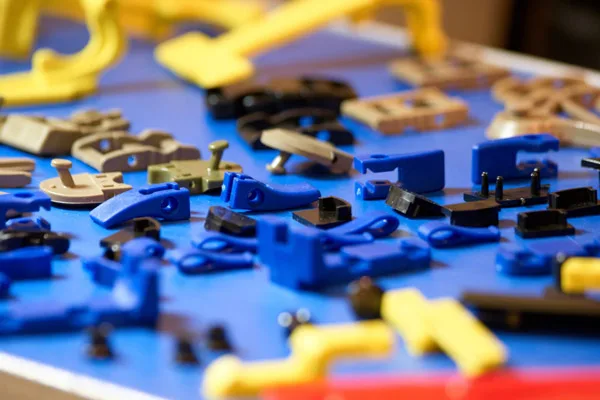
Plastic parts
4. Material Versatility and Property Enhancement
Wide Range of Materials
Injection molding supports a broad spectrum of thermoplastics, thermosets, and elastomers. Manufacturers can select materials based on specific functional requirements, such as chemical resistance, flexibility, transparency, or high-temperature performance.
Material Additives and Customization
Additives, fillers, and colorants can be incorporated into the raw materials to enhance properties like UV stability, flame retardancy, or aesthetic appeal. This level of customization allows for tailored solutions that meet diverse industry needs.
5. Improving Product Quality and Reliability
- Superior Surface Finish and Aesthetics: Injection molding produces parts with smooth surfaces and fine details, reducing the need for post-processing such as sanding or painting. Surface textures and decorative features can be integrated into the mold for enhanced aesthetics.
- Durability and Mechanical Strength: The high-pressure injection process results in dense, strong, and durable parts capable of withstanding mechanical stresses and harsh environmental conditions. This reliability is vital for safety-critical applications such as medical implants or automotive parts.
- Reduced Defects and Waste: Precise control over process conditions minimizes common defects like warping, sink marks, or voids. Additionally, excess material can often be recycled, reducing waste and environmental impact.
6. Sustainability and Environmental Benefits
Material Recycling and Waste Reduction
Injection molding supports recycling of scrap material, reducing environmental impact. Recycled plastics can often be reprocessed without degrading quality.
Energy Efficiency
Advances in machine technology have led to more energy-efficient injection molding equipment, further minimizing the environmental footprint of manufacturing operations.
Conclusion
Plastic injection molding profoundly enhances manufacturing processes by increasing speed, precision and flexibility while reducing costs and waste. Its ability to produce complex, high-quality, reliable components makes it indispensable across numerous industries. Integration of advanced technologies, from automation to real-time monitoring, continues to push the boundaries of what is possible with injection molding. As industries strive for higher quality, faster production and sustainable practices, plastic injection molding remains a critical tool for achieving these goals and driving innovation in manufacturing. Whether for small prototypes or large-scale production, the process offers unmatched advantages that elevate manufacturing standards worldwide.