
Camping and outdoor recreation have experienced significant growth over the years, driven by a desire for adventure, nature exploration and sustainable living. As demand for lightweight, durable and portable gear continues to rise, manufacturers are turning to innovative materials and manufacturing techniques. Among these, aluminum extrusion has emerged as a game-changer, enabling the development of high-quality camping equipment that combines strength, flexibility and ease of transport. This article explores the various applications of aluminum extrusion in camping gear and highlights how this versatile manufacturing process is shaping the future of outdoor equipment.
What is Aluminum Extrusion?
Aluminum extrusion is a manufacturing process in which an aluminum alloy is forced through a shaped die to produce continuous profiles with complex cross-sections. This process allows for the creation of lightweight, strong, and intricate shapes that would be difficult or impossible to achieve using traditional machining or casting methods. The resulting extruded profiles can be tailored to specific applications, making aluminum extrusion highly versatile across various industries, including outdoor and camping equipment.
Advantages of Aluminum Extrusion in Camping Gear
- Lightweight: Aluminum is known for its high strength-to-weight ratio, which is essential for portable camping equipment.
- Corrosion Resistance: Aluminum naturally forms a protective oxide layer, making it resistant to outdoor elements such as rain, humidity, and UV exposure.
- Durability: Extruded aluminum profiles are robust and can withstand rough handling and environmental stresses.
- Design Flexibility: Complex shapes, hollow sections, and customized profiles can be produced to meet specific functional requirements.
- Recyclability: Aluminum is highly recyclable, aligning with the sustainability goals of many outdoor brands and environmentally conscious consumers.
Key Applications of Aluminum Extrusion in Camping Equipment
1. Tent Frames and Poles
One of the most common applications of aluminum extrusion in camping gear is in the manufacture of tent frames and poles. Traditional poles made of fiberglass or steel are heavier and more likely to break. Aluminum extrusions address these issues by providing lightweight yet sturdy support structures.
Features: High strength, lightweight, corrosion-resistant, and easy to assemble or disassemble.
Benefits: Reduced overall weight of tents for easier transport; increased durability and stability in windy conditions; quick setup and takedown.
2. Camping Furniture
Portable camping furniture such as chairs, tables, and storage units often incorporate aluminum extrusions for their frames and support structures.
Features: Lightweight frames with reinforced joints and connectors; customizable designs for foldable or modular furniture.
Benefits: Enhanced portability, ease of transport, and long-lasting use even in harsh outdoor environments.
3. Portable Camping Stoves and Grills
Aluminum extrusions are used in constructing the supporting frames and housings of portable cooking appliances.
Features: Heat-resistant, lightweight, and corrosion-resistant profiles that can withstand high temperatures and outdoor exposure.
Benefits: Compact and easy-to-carry cooking solutions; improved heat dissipation and safety.
4. Lanterns and Portable Lighting
Extruded aluminum housings are popular in portable lanterns, headlamps, and other lighting fixtures used during camping trips.
Features: Lightweight, durable, and capable of dissipating heat effectively.
Benefits: Long-lasting lighting devices that are resistant to impacts and environmental factors.
5. Backpack Frames
High-end backpacks designed for extended outdoor adventures often feature internal aluminum extrusion frames.
Features: Rigid yet lightweight support structures that distribute weight evenly.
Benefits: Increased comfort during long hikes; enhanced load-bearing capacity without adding bulk.
6. Awnings, Canopies, and Shelter Supports
Aluminum extrusions are ideal for supporting lightweight awnings and canopy structures used to provide shade and protection.
Features: Easy-to-install profiles that resist outdoor weathering.
Benefits: Durable shelter solutions that are portable and quick to set up or dismantle.
7. Solar Panel Mounting Systems
Many camping setups incorporate portable solar panels to generate electricity off-grid. Aluminum extrusion profiles are used to create lightweight and sturdy mounting frames.
Features: Corrosion-resistant profiles tailored to specific panel sizes.
Benefits: Reliable, easy-to-transport solar solutions for extended camping trips.
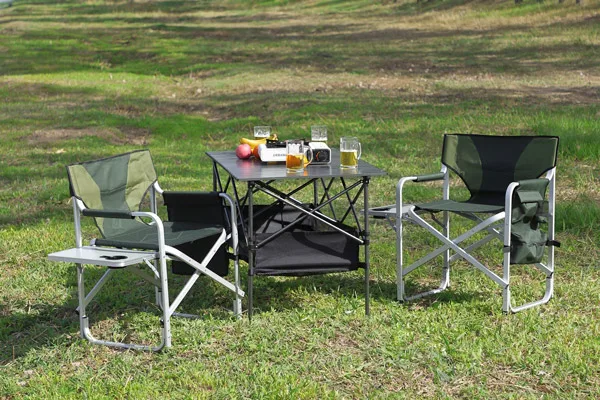
Portable aluminum camping furniture
The Manufacturing Process for Aluminum Extrusions in Camping Equipment
The production of aluminum extrusions involves several key steps:
1. Design and Die Creation: Engineers design profiles based on application specifications and custom dies are manufactured accordingly.
2. Heating: Aluminum billets are heated to a specific temperature to make them malleable.
3. Extrusion: The heated aluminum is forced through the die at high pressure to create the desired profile.
4. Cooling: The extruded profile is cooled, usually in a water bath.
5. Cutting and Finishing: The profiles are cut to length and undergo finishing processes such as anodizing, powder coating, or surface treatments to enhance corrosion resistance and aesthetics.
6. Assembly: The profiles are assembled into finished camping products, often incorporating connectors, joints and other hardware.
Future Trends and Innovations
As outdoor recreation continues to evolve, so will the use of aluminum extrusion in camping gear. Innovations include:
Integrated Design Features: Profiles with built-in channels for wiring, insulation, or adjustable components.
Eco-Friendly Manufacturing: Use of recycled aluminum and environmentally sustainable processes.
Enhanced Functionality: Profiles with improved thermal management, shock absorption, or modularity.
Smart Camping Equipment: Integration of sensors and IoT technology into extruded aluminum housings for enhanced user experience.
Conclusion
Aluminum extrusion has revolutionized the design and manufacture of camping equipment, providing a perfect blend of lightweight durability, corrosion resistance and design flexibility. Its wide range of applications – from tent poles and furniture to solar mounts and backpack frames – demonstrates its importance in creating innovative outdoor gear that meets the needs of the modern camper. As technology advances and sustainability becomes even more critical, Alcoa will continue to be at the forefront of innovation in outdoor equipment, ensuring that adventurers can explore the wilderness with reliable, portable, and environmentally friendly gear.