
Choosing the appropriate manufacturing process is a critical decision that can significantly impact the success, quality, and cost of your project. Among the many options available, Metal Injection Molding (MIM) and Die Casting are two popular methods for producing metal components, each with its own advantages and limitations. Understanding the key differences between these processes will help you make an informed decision tailored to your specific needs.
What is Metal Injection Molding (MIM)?
Metal Injection Molding is a manufacturing process that combines the versatility of plastic injection molding with the strength and durability of metal. It involves mixing fine metal powders with a binder material to create a feedstock, which is then injected into a mold under high pressure. After molding, the component undergoes a debinding process to remove the binder, followed by sintering to fuse the metal particles into a solid, dense part.
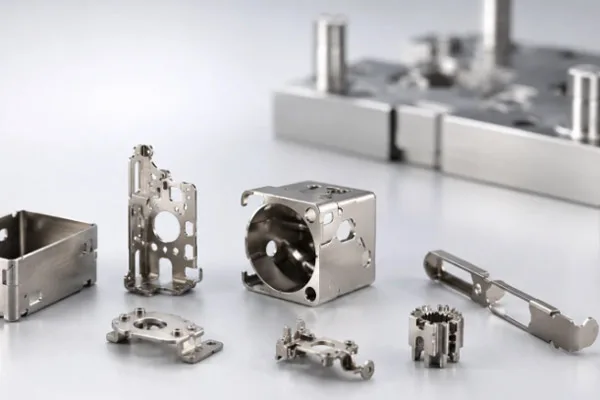
Metal injection molding parts
Advantages of MIM:
Complex Geometries: MIM allows for the production of intricate and detailed parts that are difficult or impossible to achieve with traditional methods.
Near-Net Shape: Components can be produced close to the final dimensions, reducing machining requirements.
Material Variety: A wide range of metals and alloys are available, including stainless steel, titanium, and superalloys.
Cost-Effective for Small to Medium Production Runs: Especially suitable for complex parts in lower quantities.
Limitations of MIM:
Initial Tooling Costs: Molds can be expensive, making it less economical for very small production runs.
Post-Processing Requirements: Parts often require debinding and sintering, which can add to production time.
Limited Size Range: Typically suitable for small to medium-sized components.
What is Die Casting?
Die Casting is a manufacturing process where molten metal is injected into a steel mold under high pressure. Once cooled and solidified, the die is opened to eject the finished part. Die casting is widely used for high-volume production of metal parts with excellent surface finish and dimensional accuracy.
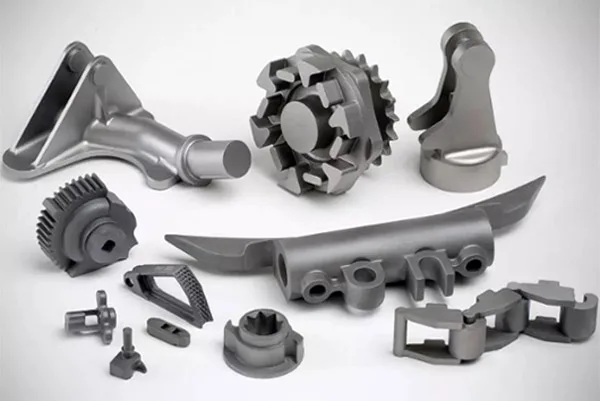
Aluminium die casting parts
Advantages of Die Casting:
High Production Rates: Capable of producing thousands to millions of parts quickly.
Excellent Surface Finish: Minimizes or eliminates the need for secondary finishing.
Dimensional Precision: Produces parts with tight tolerances.
Material Options: Commonly used with aluminum, zinc, magnesium, and other non-ferrous metals.
Limitations of Die Casting:
High Initial Investment: Tooling costs are substantial, making it less suitable for small batches.
Design Constraints: Limited to parts that can withstand the high pressure of molten metal injection; complex internal features may be challenging.
Porosity Concerns: Parts may contain porosity or inclusions, which can affect mechanical properties.
Key Differences Between Metal Injection Molding and Die Casting
|
Aspect |
Metal Injection Molding (MIM) |
Die Casting |
| Part Complexity | Excellent for intricate, detailed designs | Suitable for simple to moderately complex parts |
| Production Volume | Cost-effective for small to medium runs | Ideal for high-volume production |
| Material Range | Wide variety, including advanced alloys | Primarily non-ferrous metals like aluminum, zinc, magnesium |
| Tooling Cost | High initial cost, amortized over production | Very high initial cost, justified by high volume |
| Part Size | Small to medium-sized components | Small to medium-sized components |
| Surface Finish | Good, but may require post-processing | Excellent, often ready for use straight from mold |
| Mechanical Properties | Homogeneous, good strength | Slight porosity may be present, but generally strong |
| Lead Time | Longer due to post-processing | Shorter, rapid production cycle |
Which Process Is Right for Your Project?
The choice between Metal Injection Molding and Die Casting depends largely on your project’s specific requirements:
Complex Geometry and Small to Medium Production Runs: If your design involves intricate features, fine details, or small quantities, MIM is likely the better choice. It allows for high precision and complex shapes without extensive secondary machining.
High-Volume Production and Larger Parts: For large quantities of parts with simpler geometries, die casting offers rapid production, excellent surface finish, and cost efficiency over time.
Material Needs: Consider the alloy requirements. MIM offers a broader selection, including high-performance and exotic alloys. Die casting is mostly limited to certain non-ferrous metals.
Cost and Lead Time: Evaluate your budget and timeline. MIM has higher tooling costs upfront but lower per-part costs for smaller runs. Die casting requires significant initial investment but is more economical for mass production.
Conclusion
Both Metal Injection Molding and Die Casting are valuable manufacturing processes with distinct advantages. Your decision should be based on factors such as part complexity, production volume, material specifications, budget, and timeline. Consulting with manufacturing experts and prototype testing can further inform your choice, ensuring you select the most suitable process for your project’s success.
If you’re still unsure which method aligns best with your needs, consider reaching out to industry specialists or conducting a feasibility analysis to weigh the benefits and limitations tailored to your specific application.