
In the modern manufacturing landscape, CNC steel machining has become an essential process for producing precise, durable, and complex steel components. Its versatility and accuracy have made it indispensable across numerous industries, from aerospace to medical devices. This comprehensive guide explores the fundamental aspects of CNC steel machining, including its working principles, key operations, surface finishes, material selection, applications, benefits, challenges, and considerations for choosing the right service provider.
What is Steel CNC Machining?
Steel CNC machining refers to the use of computer-controlled machine tools to cut, shape, and finish steel materials into desired forms. Unlike manual machining, CNC technology employs automated systems guided by pre-programmed software, allowing for high precision, repeatability, and complex geometries. It enables manufacturers to produce components with tight tolerances, intricate features, and superior surface quality, meeting the stringent requirements of various industrial standards.
How Does Steel CNC Machining Work?
The process begins with the design phase, where a detailed CAD model of the part is created. This model is then converted into a CNC program through CAM software, which defines tool paths, cutting speeds, feeds, and other parameters. During machining, CNC machines follow these programmed instructions to remove material from the steel workpiece with high precision.
The machinery used can include mills, lathes, drills, grinders, and more specialized equipment like EDM. Coolants and lubricants are applied to reduce heat, minimize tool wear, and ensure a smooth finish. The entire operation is highly automated, enabling consistent production of complex parts with minimal human intervention.
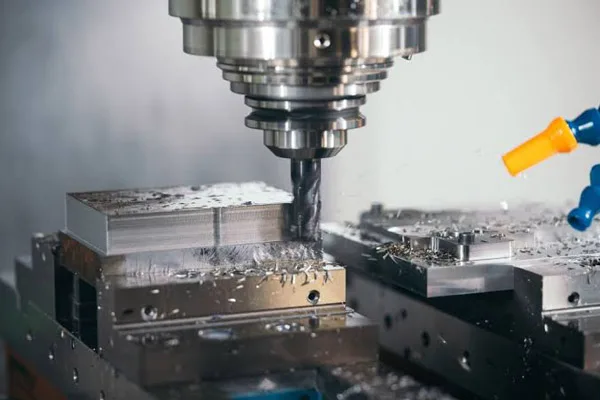
Steel cnc milling
Key Operations in CNC Steel Machining
Several fundamental operations constitute CNC steel machining:
- Milling: Utilizes rotary cutters to shape the steel by removing material from the workpiece, creating features such as slots, pockets, and complex contours.
- Turning: Involves rotating the steel workpiece against a stationary cutting tool, ideal for producing symmetrical cylindrical parts like shafts and pulleys.
- Drilling: Creates precise holes necessary for assembly, fasteners, or functional features.
- Boring and Reaming: Enhance hole accuracy and surface finish, especially for precision applications.
- Surface Grinding: Achieves smooth, flat surfaces with high dimensional accuracy and fine surface finishes.
- Profiling and Contouring: Produces complex three-dimensional shapes and intricate geometries.
- EDM (Electrical Discharge Machining): Allows for machining hard or delicate features that are difficult to achieve with traditional cutting tools.
Surface Finishes in CNC Steel Machining
Surface finish quality is critical in many applications and can be tailored to meet specific functional or aesthetic requirements. Common surface finishes include:
Matte Finish: Provides a non-reflective surface with moderate smoothness, suitable for functional parts.
Mirror Finish: Produces a highly reflective surface for decorative or precision components.
Bead Blasting: Creates a uniform, textured surface, often used for aesthetic purposes or to improve adhesion.
Anodizing or Coating: Adds protective layers for corrosion resistance and enhanced appearance.
Types of Steel Used in CNC Machining and Steel Grades
The selection of steel material significantly impacts machining processes and the performance of the final component. Common types include:
- Carbon Steel: Cost-effective and widely used, with grades like AISI 1045 suitable for structural and mechanical parts.
- Alloy Steel: Contains additional elements like chromium, molybdenum, or nickel for improved strength, toughness, and corrosion resistance. Examples include AISI 4140 and 4340.
- Stainless Steel: Known for corrosion resistance and aesthetic appeal, with grades such as 304, 316, and 17-4 PH used in medical, marine, and decorative applications.
- Tool Steel: Designed for tooling and dies, with grades like D2, H13, and S7, suitable for molds and cutting tools.
- High-Speed Steel (HSS): Used for cutting tools, providing wear resistance and high-temperature strength.
How to Select the Appropriate Steel for Your Project?
Choosing the right steel involves considering several factors:
Mechanical Properties: Strength, toughness, hardness, and ductility requirements.
Environmental Conditions: Corrosion resistance for outdoor or humid environments.
Machinability: Ease of cutting and shaping, which varies among steel grades.
Cost and Availability: Budget constraints and material availability.
Final Application: Functional, aesthetic, or regulatory considerations.
Consultation with material experts or suppliers can help identify the best steel grade for specific project needs.
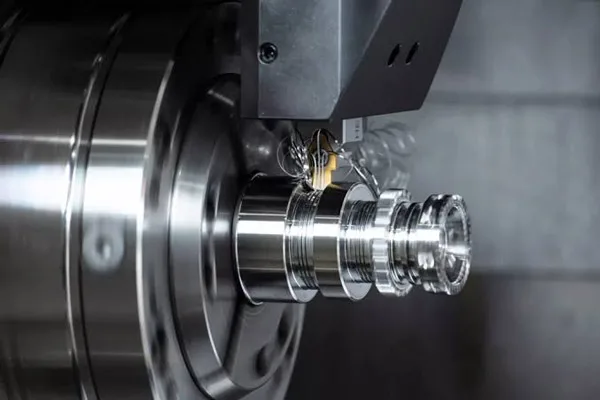
Stainless steel cnc machining
Applications and Use Cases for Steel CNC Machining
CNC steel machining serves a broad spectrum of industries:
- Automotive: Manufacturing engine components, transmission parts, frame elements, and custom prototypes.
- Aerospace: Producing aircraft structural parts, landing gear, engine components, and precision fittings.
- Medical: Creating surgical instruments, implants, and diagnostic devices from biocompatible stainless steels.
- Industrial Machinery: Fabricating gears, shafts, valves, and heavy-duty components for manufacturing equipment.
- Defense: Manufacturing weapon parts, armored vehicle components, and military-grade hardware.
- Construction: Producing structural elements, fasteners, and specialized tools.
Advantages of CNC Steel Machining
High Precision: Achieves tolerances within micrometers, ensuring consistent quality.
Complex Geometries: Capable of producing intricate designs and features that manual machining cannot replicate.
Repeatability: Maintains strict dimensional consistency across large production runs.
Efficiency: Reduces production time and minimizes material waste.
Flexibility: Easily adaptable to different designs, materials, and modifications.
Cost-Effective for Large Batches: Reduces labor costs and increases throughput in mass production.
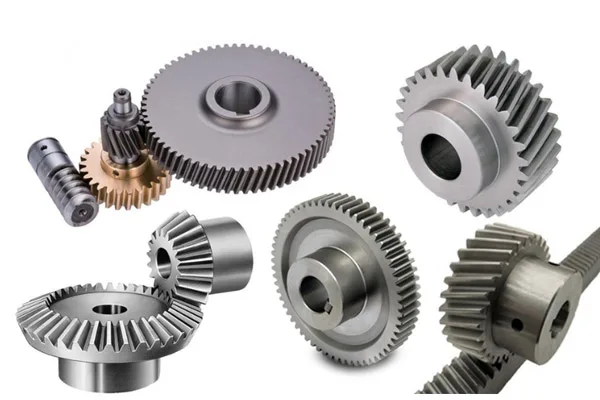
CNC machining gears
Challenges Faced in CNC Steel Machining
Despite its benefits, CNC steel machining presents certain challenges:
- Tool Wear and Material Hardness: Steel’s hardness demands durable tooling and proper maintenance.
- Heat Generation: Machining generates heat, which can distort parts; effective cooling systems are essential.
- Material Handling: Some alloys are prone to warping, cracking, or work hardening.
- Cost of Equipment and Setup: High initial investment in CNC machinery and tooling can be a barrier for small manufacturers.
- Skill Requirements: Requires skilled operators and programmers for optimal results.
Design Considerations for CNC Steel Machining
Effective design can streamline manufacturing and optimize results:
Minimize Sharp Internal Corners: Use fillets or chamfers to reduce stress concentrations and facilitate machining.
Incorporate Draft Angles: For parts that require molding or assembly.
Avoid Excessive Thin Walls: Thin features are prone to warping or breakage.
Design for Accessibility: Ensure tooling can reach all features.
Tolerances and Surface Finish: Clearly specify based on functional requirements to avoid unnecessary manufacturing complexity.
Choosing the Right Steel CNC Machining Service
Selecting a reliable CNC machining service requires evaluating:
- Experience and Capabilities: Ensure they can handle your specific material and complexity.
- Quality Certifications: Look for ISO or industry-specific standards.
- Turnaround Time: Confirm they can meet your project deadlines.
- Customer Support: Good communication and technical support are vital.
- Cost and Value: Balance pricing with quality and service offerings
Conclusion
CNC steel machining is a vital manufacturing process that combines advanced technology with material science to produce high-quality, complex steel components. Its versatility, precision, and efficiency make it suitable for a wide range of applications across industries. By understanding the core processes, materials, surface finishes, and design considerations, manufacturers can optimize their projects and achieve superior results. When selecting a CNC machining service, careful evaluation ensures the best partnership for quality, reliability, and cost-effectiveness. As technology continues to evolve, CNC steel machining will remain at the forefront of manufacturing innovation, driving progress in various sectors worldwide.