
Powder coating is a popular and versatile finishing process used in a wide range of industries, from automotive to household appliances, outdoor furniture, and architectural components. It offers an environmentally friendly alternative to traditional liquid paint, providing durable, high-quality finishes that resist corrosion, chipping, and fading. Its ability to deliver consistent, aesthetically pleasing results with minimal waste has made it a preferred choice in modern manufacturing and finishing processes.
What Is Powder Coating?
Powder coating is a dry finishing process that involves applying a powdered form of paint onto a substrate, typically metal, plastic, or other rigid surfaces. Unlike conventional liquid paints that use solvents and require drying time, powder coatings are composed of finely ground particles of pigments and resins. These particles are electrostatically charged and sprayed onto a grounded surface, where they adhere and form a uniform coating.
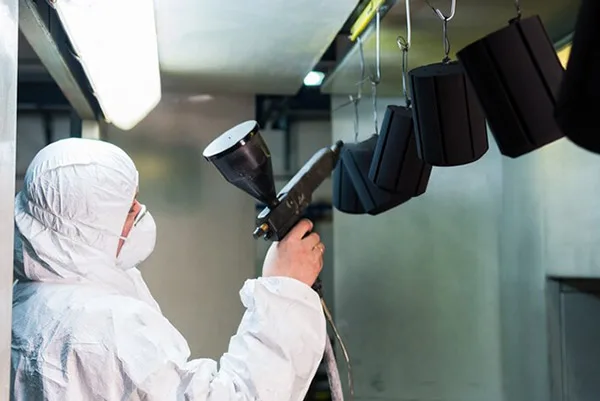
Powder coating for metal parts
How Does Powder Coating Work?
1. Preparation of the Surface: The substrate—often metal—is cleaned thoroughly to remove dirt, grease, rust, or old paint. This ensures proper adhesion of the powder coating.
2. Application of the Powder: The powder, which consists of pigments and resins, is electrostatically charged using specialized spray guns. The charged powder particles are then sprayed onto the grounded surface, adhering evenly due to electrostatic attraction.
3. Curing Process: The coated object is placed in an oven and heated to a specified temperature. During curing, the powder melts and chemically crosslinks, forming a tough, durable coating.
4. Cooling: Once cooled, the coating hardens into a smooth, protective finish.
Types of Powder Coatings
There are various types of powder coatings tailored to different applications:
- Thermosetting powders: These contain resins like epoxy, polyester, or polyurethane that chemically crosslink during curing, resulting in a hard, durable finish.
- Thermoplastic powders: These melt and flow upon heating but do not chemically crosslink. They can be reheated and remelted, making them suitable for special applications.
Application Techniques
There are several techniques used to apply powder coating:
Electrostatic Spray Gun: The most common method, where powder is electrostatically charged and sprayed onto the grounded surface.
Fluidized Bed Coating: The object is dipped into a bed of fluidized powder, which adheres to the surface and is then cured.
Electrostatic Fluidized Bed: Combines fluidized bed and electrostatic application for uniform coating.
Electrophoretic Deposition: Uses electric fields to deposit charged particles onto complex shapes, mainly for automotive or intricate parts.
What Are the Supported Materials for Powder Coating?
Steel and Aluminum: Most prevalent due to excellent adhesion and durability.
Plastic Components: Certain plastics can be powder coated, especially with specialized powders.
Other Rigid Materials: Such as glass or ceramic, with appropriate surface preparation and coating formulations.
However, non-conductive materials like wood or fabrics generally require special procedures or are not suitable for traditional powder coating.
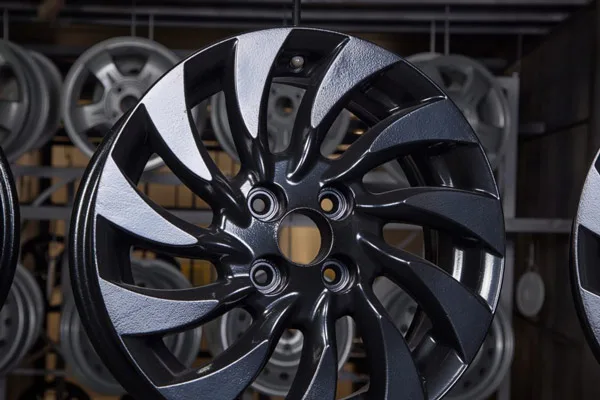
Power coating car wheels
Common Applications of Powder Coating
Automotive Industry: Coating wheels, bumpers, and engine components.
Architectural Components: Window frames, doors, fencing, and railings.
Household Appliances: Refrigerators, washing machines, and microwave ovens.
Outdoor Furniture: Benches, tables, and patio furniture.
Industrial Equipment: Storage tanks, machinery parts, and agricultural equipment.
Advantages of Powder Coating
Powder coating offers numerous benefits over traditional liquid paints:
Environmental Friendly: It produces minimal volatile organic compounds (VOCs), reducing air pollution and health risks.
Durability: Powder coatings are highly resistant to scratches, chipping, fading, and corrosion, making them suitable for outdoor and heavy-use applications.
Cost-Effective: Although initial equipment costs can be higher, the process reduces material waste and lowers labor costs.
Aesthetic Flexibility: Available in a wide range of colors, textures, and finishes, including matte, gloss, and textured surfaces.
Uniform Finish: The electrostatic application ensures an even coating without drips or runs.
Disadvantages of Powder Coating
Surface Limitations: Primarily suitable for metallic and certain plastic surfaces; non-conductive materials require special treatment.
Equipment Investment: Requires specialized spray guns, ovens, and curing equipment, which may be costly for small-scale operations.
Thickness Limitations: Achieving very thick coatings can be challenging and may require multiple layers.
Repair and Touch-Ups: Touch-up work can be difficult since the coating is often baked onto the surface.
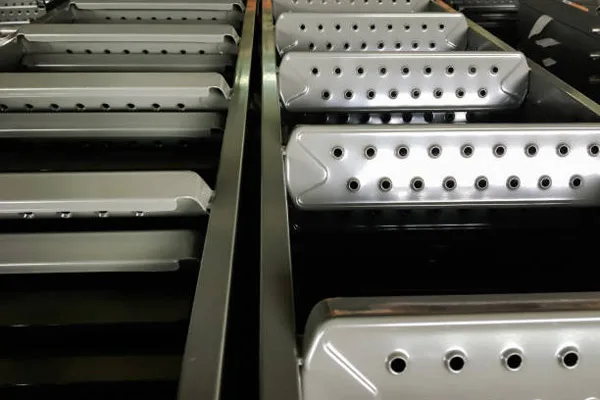
Power coating gates
Safety Considerations for Powder Coating Work
Ventilation: Proper ventilation or exhaust systems to handle airborne powders and fumes during curing.
Protective Equipment: Use of masks, gloves, and eye protection to prevent inhalation or skin contact with powders.
Fire Safety: Powder coatings are combustible; proper storage and handling are necessary, and equipment should be grounded.
Training: Operators should be trained in safe application and curing procedures.
Environmental Impact of Powder Coating
Low VOC Emissions: It produces minimal volatile organic compounds compared to liquid paints.
Recyclability: Overspray can be collected and reused, reducing waste.
Less Hazardous Waste: Fewer hazardous solvents and chemicals are involved.
Energy Efficient: Curing is rapid and requires less energy than some traditional painting methods.
This sustainability aspect makes powder coating an eco-conscious choice for many manufacturers and industries.
Conclusion
Powder coating is a versatile, durable, and environmentally friendly finishing process that has revolutionized surface finishing across numerous industries. Its ability to produce high-quality, long-lasting coatings while minimizing environmental impact makes it an attractive choice for manufacturers and consumers alike. As technology advances, powder coating continues to evolve, offering even greater efficiency, variety, and sustainability in surface finishing solutions.