
The journey from a toy designer’s sketch to a child’s hands is paved with critical manufacturing decisions. Among the various production methods available, vacuum casting occupies a unique and invaluable position in the toy industry. This manufacturing process, also known as urethane casting or vacuum duplication, serves as a crucial bridge between initial concept and mass production, enabling the creation of high-quality plastic parts without the substantial investment required for steel tooling.
Vacuum casting typically produces 5 to 100 parts with quality remarkably close to injection molding, making it the ideal solution for prototyping, small-batch production, and market validation. This article explores how vacuum casting is transforming toy development and manufacturing, from functional prototypes to limited-edition collectibles.
Understanding Vacuum Casting
Vacuum casting is a manufacturing process that involves pouring liquid polyurethane resin into a silicone mold inside a vacuum chamber. The vacuum removes trapped air, ensuring a complete cavity filling and a bubble-free section with an excellent surface finish. This process supports complex shapes, undercuts, and even insert over-molding, providing remarkable design flexibility that toy designers particularly value.
The Complete Process: From Digital Model to Physical Toy
The vacuum casting workflow for toy development follows a systematic sequence that combines modern digital design with traditional mold-making techniques:
1. Create a 3D Model: The journey begins with CAD software such as AutoCAD, SolidWorks, or CATIA. Toy designers must follow injection molding design rules, including draft angles, uniform wall thickness, and allowances for undercuts to ensure successful casting.
2. Build the Master Pattern: A master pattern is produced from the 3D model using SLA 3D printing or CNC machining. While CNC offers higher dimensional accuracy for pre-series parts, 3D printing accelerates prototyping and reduces costs during early design validation.
3. Create the Silicone Mold: The master pattern is placed in a casting box, and liquid silicone is poured over it to capture every detail of its geometry and surface texture. The mold cures in an oven at 40°C for 8 to 16 hours, depending on size. Once cured, it is cut open along the parting line to reveal the negative cavity, and mold-release agent is applied.
4. Mix and Pour the Resin: Two-component polyurethane resin is prepared with any required pigments. The mixture is preheated to approximately 40°C for better flow, then mixed and deaerated under vacuum for 50-60 seconds to remove air bubbles before being poured into the mold.
5. Demold the Parts: The filled mold cures in an oven for 1 to 4 hours. After curing, the hardened part is removed from the flexible silicone mold, gates are trimmed, and any needed finishing is performed.
When to Choose Vacuum Casting for Toy Projects
Ideal scenarios for vacuum casting in toy development include: Creating 5-100 units with production-like quality without steel tooling investment Testing form, fit, and finish before committing to injection molding Producing flexible or rubber-like components with specific Shore hardness requirements Manufacturing limited-edition collectibles or niche market toys Creating exhibition samples or marketing prototypes where aesthetics matter When to consider alternatives: For single prototypes or rapid iterations, 3D printing offers faster turnaround For production runs exceeding 100 units, injection molding becomes more economical For parts requiring tight tolerances below ±0.3 mm, CNC machining may be preferable
Advantages and Limitations for Toy Manufacturing
Injection-Like Quality:
Vacuum casting produces components with superior aesthetics, fine details and mechanical strength that closely mimic injection-molded components. This makes it invaluable for creating presentation-quality prototypes for trade shows, focus groups, or investor presentations.
Design Flexibility:
The silicone molds can accommodate complex shapes, undercuts, and varying wall thicknesses without the constraints of traditional tooling. Toy designers are free to iterate, testing non-uniform geometries and aesthetic details.
Wide Material Range:
From rigid ABS-like plastics for action figure bodies to flexible rubber-like materials for soft toys or grippy components, vacuum casting offers a wide range of material options. Transparent resins enable light pipes or decorative elements, while RAL-colorable pigments ensure exact brand color matching.
Multiple Finishes Available:
Products can be produced with glossy finishes that highlight the geometry or matte textures that reduce reflections, all without post-processing. Additional finishing options include polishing, painting, and metallization.
Limitations to Consider
Manual Process: Vacuum casting involves significant manual operation, which reduces dimensional accuracy, throughput, and repeatability compared to automated methods. This makes it less suitable for large-scale production.
Limited Mold Life: A single silicone mold typically produces only 10 to 20 parts, depending on geometry and resin type. or runs exceeding this quantity, multiple molds must be created.
Potential Visual Flaws: Gate marks, release gloss, and other cosmetic imperfections can occur, though careful process control minimizes these issues.
Slower Than Alternatives: For single prototypes, 3D printing offers faster turnaround. For high volumes, injection molding is more efficient.
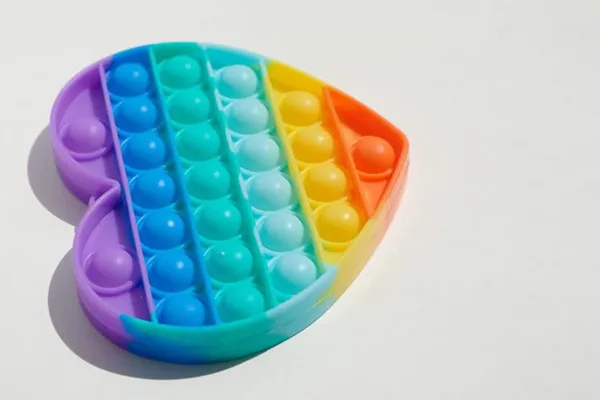
Silicone toys
Strategic Applications in the Toy Industry
Prototyping and Design Validation
The most common application of vacuum casting in toys remains prototyping. Designers use it to create realistic copies of new action figures, model kit parts, or playset components for form, fit, and function testing. This allows validation with focus groups or internal stakeholders without the cost of production tooling.
Bridge Production
Between prototype approval and full-scale manufacturing, vacuum casting was used as bridge production. Companies can generate initial inventories for pre-launch sales, trade shows or limited market launches, while steel molds are fabricated – a process that can take months.
Limitations and Considerations
For collectibles, custom figurines or toys aimed at niche markets, the economics of injection molding often do not work. Vacuum casting is a cost-effective alternative to producing these items in the small quantities required by the market.
Future Trends
As the toy industry continues to evolve, the role of vacuum casting is likely to expand. The global vacuum casting market is projected to grow steadily, driven by demand for customization, faster product development cycles, and continued expansion in the niche collectible market.
Conclusion
Vacuum casting has established itself as an indispensable tool in the toy industry, bridging the gap between design and mass production. Its ability to produce high-quality prototypes, small batches and custom parts makes it a versatile solution for manufacturers aiming to innovate quickly, reduce risk and meet market expectations. As the industry continues to evolve, vacuum casting will undoubtedly remain a vital component in the development and production of engaging, safe and innovative toys for children worldwide.