
In recent years, 3D printing technology has revolutionized numerous industries, from manufacturing to healthcare, and now it is making a major impact in horticulture. One of the most innovative applications is the creation of customized flower pots, which allows gardeners, landscapers, and plant enthusiasts to design and produce unique containers tailored to their specific needs and aesthetic preferences. This article provides a comprehensive guide to understanding 3D printing flower pots, exploring the benefits, materials, design considerations, and practical tips for getting started.
The Rise of 3D Printing in Horticulture
3D printing, also known as additive manufacturing, involves building objects layer by layer based on digital models. This technology offers unparalleled flexibility in creating complex shapes and customized designs that traditional manufacturing methods often cannot achieve cost-effectively. In horticulture, 3D printing opens up new possibilities for creating innovative, functional and decorative plant containers.
Benefits of 3D Printed Flower Pots
Customization and Personalization: 3D printing allows users to design pots that perfectly match their aesthetic preferences, space constraints, or specific plant requirements. Whether it’s a miniature pot for succulents or an elaborate decorative container, customization is virtually limitless.
Innovative Designs: The technology supports complex geometries, intricate patterns, and organic shapes that are difficult or impossible to produce with conventional methods.
Rapid Prototyping: Designers can quickly create and test different designs, making it easier to refine the appearance and functionality of the pots.
Cost-Effectiveness: For small batches or one-off designs, 3D printing can be more economical than traditional manufacturing, especially when considering the design flexibility.
Sustainability: With the ability to produce on-demand, 3D printing reduces waste and excess inventory. Additionally, eco-friendly materials are increasingly available.
Materials Used in 3D Printing Flower Pots
Choosing the right material is crucial for the durability, safety, and aesthetic appeal of 3D printed pots. Common materials include:
- PLA (Polylactic Acid): A biodegradable thermoplastic derived from renewable resources like cornstarch. It is easy to print, environmentally friendly, and available in many colors. However, PLA has limited heat resistance and may degrade over time when exposed to outdoor conditions.
- PETG (Polyethylene Terephthalate Glycol): Offers better chemical and temperature resistance than PLA, making it suitable for outdoor pots.
- ABS (Acrylonitrile Butadiene Styrene): Known for strength and heat resistance, but it emits fumes during printing and requires a heated bed.
- Resins: Used in SLA (Stereolithography) printers, offering high detail and smooth finishes. Some resins are food-safe and UV resistant.
- Specialty Composites: Materials infused with wood, metal, or other particles for unique aesthetics and properties.
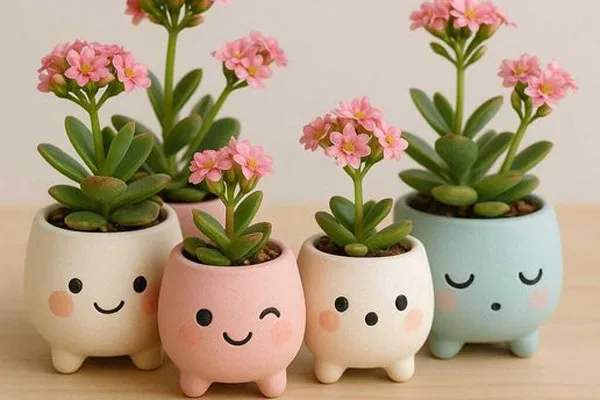
Cute 3d printing flower pots
Design Considerations for 3D Printed Flower Pots
When designing a 3D printed flower pot, consider the following factors:
Drainage: Most plants require proper drainage to prevent root rot. Incorporate drainage holes or a removable tray in your design.
Ventilation: Adequate airflow helps maintain healthy roots. Some designs include ventilation slots or perforations.
Structural Integrity: Ensure the pot is sturdy enough to support the weight of the soil and plant. Thicker walls or reinforcement ribs may be necessary.
Size and Shape: Tailor the dimensions to accommodate the specific plant’s growth habits and root system.
Material Compatibility: Confirm that the chosen material is suitable for plant growth and safe for outdoor exposure if necessary.
Aesthetics: Incorporate decorative elements, textures, or personalized engravings to enhance visual appeal.
Practical Tips for 3D Printing Flower Pots
1. Design Software: Use CAD (Computer-Aided Design) programs to create your model.
2. Prototyping: Start with small or simple designs to test material compatibility and printing settings.
3. Layer Orientation: Optimize orientation to reduce the need for support structures and improve surface quality.
4. Post-Processing: Sanding, sealing, or painting can improve the appearance and longevity of the pots.
5. Environmental Considerations: For outdoor use, consider weatherproofing options or selecting weather-resistant materials.
6. Printing Settings: Adjust temperature, infill density, and print speed according to material specifications for the best results.
Future Trends and Innovations
As 3D printing technology continues to evolve, we can expect even more sophisticated applications in horticulture, including:
- Smart Pots: Incorporating sensors for soil moisture, temperature, or nutrient levels.
- Biodegradable and Edible Pots: Exploring environmentally friendly options that decompose naturally or can be consumed.
- Mass Customization: Producing personalized pots at scale for commercial nurseries and garden centers.
- Hybrid Manufacturing: Combining 3D printing with traditional methods for complex designs and functional features.
Conclusion
3D printing flower pots represents a fusion of technology and nature, offering endless possibilities for customization, innovation, and sustainable gardening practices. Whether you’re a hobbyist looking to craft unique containers or a professional landscaper seeking functional and aesthetic solutions, embracing 3D printing can elevate your horticultural projects to new heights. As the technology becomes more accessible and materials more versatile, the future of personalized, functional, and beautiful plant containers is brighter than ever.