
3D-Printed Tooling: Revolutionizing Plastic Injection Molding from Prototype to Production
For decades, plastic injection molding reigned supreme as the undisputed champion of high volume, high precision and cost-effective manufacturing. Its foundation has always been meticulously machined metal molding – a masterpiece of engineering, but one that comes with significant cost, time and commitment. For start-ups, niche players and fast-moving innovators, this presents a formidable barrier to entry. The advent of additive manufacturing (3D printing) is not replacing this titan; Instead, it is forging a powerful symbiotic relationship that democratizes access to plastic injection molding and infuses unprecedented agility into the entire product development lifecycle.
This technical exploration delves into how 3D-printed molds are transforming the industry, moving beyond simple prototyping to become a viable tool for low-volume production and a catalyst for innovative mold design.
The Core Paradigm Shift: From Tooling as a Cost to Tooling as a Process
Traditionally, tooling is a capital expense—a high-risk, high-reward upfront investment. 3D printing reframes tooling as an operational expense, enabling an iterative, low-risk development process. The fundamental shift is from “design – build expensive tool – hope it works” to “design – print affordable tool – test – iterate – finalize.”
This paradigm shift also aligns with the modern concept of agile manufacturing, where rapid iteration and flexibility are key. It allows designers and engineers to quickly explore multiple design variants, validate functional performance, and adapt to evolving requirements without the delays and costs associated with traditional machining. And, this approach fosters innovation in materials and mold geometry, opening up possibilities that were previously impractical or impossible.
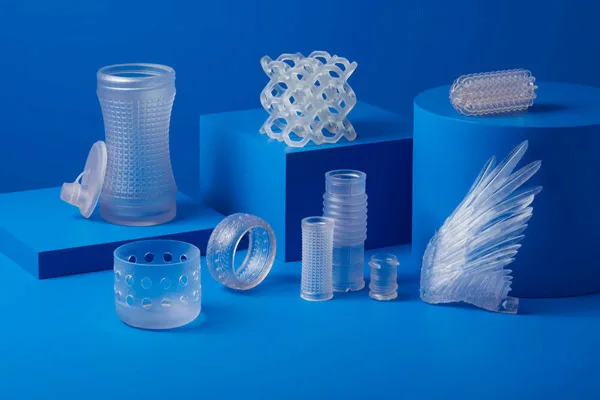
SLA products
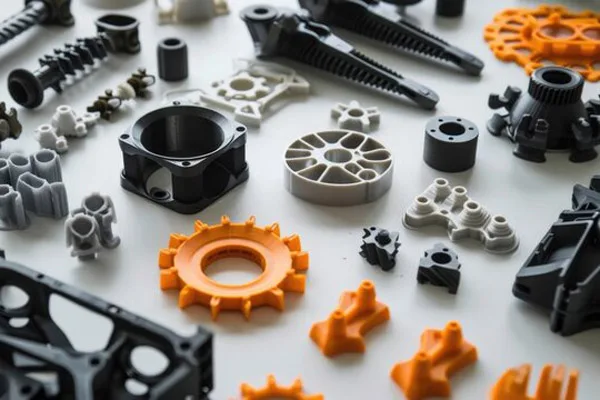
Low volume 3d parts
Technical Applications and Workflows
1. Rapid Prototyping and Design Validation
This remains the most widespread use. Engineers can design and 3D print mold inserts—typically for less complex parts or as cavity/core inserts in a standardized mold frame—in a matter of days.
- Materials & Technologies: High-temperature photopolymer resins processed via Stereolithography (SLA) or Digital Light Processing (DLP) are common. They offer excellent feature resolution and a smooth surface finish.
- Process: The printed inserts are assembled into a mold base and used on standard or smaller-tonnage plastic injection molding machines.
- Output: The result is true-to-material prototypes. Instead of a 3D-printed part in a simulation material, teams get functional parts in the final production-grade thermoplastic. This allows for rigorous testing of mechanical properties, snap-fits, living hinges, and environmental resistance long before steel is cut.
2. Low-Volume and Bridge Production
For production runs of 50 to 5,000 parts, 3D-printed molds are economically optimal. They serve the “long tail” of manufacturing: custom medical devices, pilot runs, spare parts for legacy systems, and market testing.
- Materials & Technologies: Here, metal additive manufacturing takes precedence. Direct Metal Laser Sintering (DMLS) using tool steel alloys or bound metal deposition produces durable inserts. For less abrasive materials, high-performance polymers like PEI or carbon-filled composites can also be used.
- Benefit: It enables economies of one. The break-even point compared to a machined aluminum or steel mold can be in the hundreds of parts, making ultra-customized or on-demand manufacturing feasible.
3. Innovation in Mold Design: Conformal Cooling
This is where 3D printing delivers capabilities impossible with traditional machining. Conformal cooling channels are waterways that follow the precise contour of the mold cavity at a near-constant distance.
- Traditional Limitation: Drilled cooling channels are straight, leading to uneven cooling, hot spots, part warpage, and longer cycle times.
- Additive Advantage: DMLS allows for the creation of complex, lattice-supported channels that optimize heat extraction.
- Quantifiable Impact: Studies and industry case reports consistently show cycle time reductions of 15-70% and significant improvements in part dimensional stability and cosmetic quality. This directly translates to the energy savings highlighted in the original text, as the single most energy-intensive phase of the plastic injection molding cycle is drastically shortened.
Emerging Applications and Future Trends
Beyond prototyping and low-volume production, 3D-printed tooling is paving the way for innovative applications such as:
Hybrid Molds: Combining traditional metal components with 3D-printed inserts or conformal cooling channels to maximize durability and thermal efficiency.
Embedded Sensors and Smart Molds: Incorporating sensors within 3D-printed molds to monitor temperature, pressure, and cycle times in real-time, enabling predictive maintenance and process optimization.
Customizable and Adaptive Molds: Developing molds that can be easily modified or reconfigured via additive manufacturing to accommodate design changes or different product variants without significant additional costs.
Material Science Considerations
The success of a 3D-printed mold depends on material selection, a balance of thermal, mechanical and economic factors:
Thermal Conductivity: Metals like copper alloys offer superior conductivity for cooling but may lack hardness. Tool steels provide a balance.
Heat Deflection Temperature (HDT): For resin molds, the HDT must far exceed the melt temperature of the injected plastic. Venting and careful process control are critical.
Abrasion Resistance: Glass or mineral-filled polymers will rapidly wear down polymer and even soft metal molds. This defines the practical lifespan of the tool.
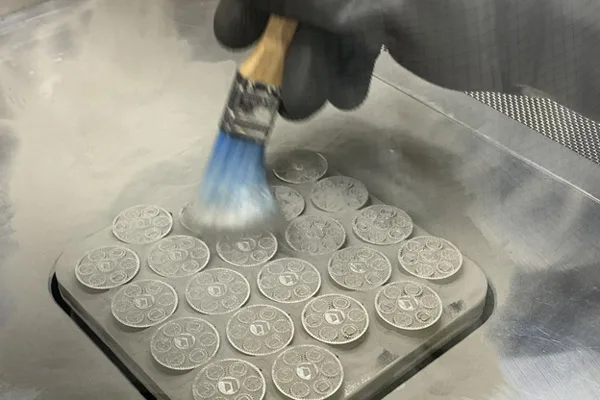
DMLM parts
The Sustainability Advantage: A Data-Driven Benefit
Material Efficiency:
Additive manufacturing is inherently less wasteful than subtractive machining, where a block of metal may have 80% of its mass milled away. 3D printing uses only the materials needed for the mold geometry and support.
Energy Reduction:
The dramatic cycle time reduction of conformal cooling leads to direct energy savings for each component. In addition, local, on-demand tooling and production minimizes the carbon footprint of global shipping of tools and finished goods.
Waste Prevention:
By validating designs with real-material prototypes, companies avoid the catastrophic waste of producing thousands of defective parts from a faulty steel mold, embodying a “right-first-time” philosophy.
Conclusion: A Complementary and Transformative Force
3D-printed injection molds are not a panacea, but they are a profoundly transformative tool. They have effectively created a new tier in the manufacturing landscape, sitting between prototyping and mass production. They empower engineers with unparalleled flexibility, dramatically reduce the time and cost of innovation, and enable sustainable, localized manufacturing models.
The future lies in the continued integration of these technologies. As additive manufacturing materials advance in durability and conductivity, and as design software seamlessly optimizes for conformal cooling, the line between “printed prototype tooling” and “printed production tooling” will continue to blur. The world of plastic injection molding was no longer just about metal; It’s about choosing the right tool, for the right stage, with the right economics-and 3D printing has irrevocably expanded that choice.