
Vacuum casting plays a crucial role in the prototyping, validation, and low-volume production of automotive sensors, where precision, durability, and rapid iteration are essential before committing to high-cost mass-production tooling.
Key Automotive Sensor Applications
1. Prototype Housings & Enclosures
Environmental Sensors: Housing prototypes for temperature, humidity, and air quality sensors with specific sealing surface geometries.
Position & Speed Sensors: Casings for camshaft, crankshaft, and wheel speed sensors requiring precise tolerances and complex internal features.
Pressure Sensors: Housings for MAP, fuel, or tire pressure sensors that must withstand harsh under-hood conditions.
2. Connectors & Wire Harness Components
Waterproof Connector Prototypes: Simulating the exact form, fit, and sealing ribs of sensor connectors before injection molding.
Grommets and Seals: Flexible components that protect sensor wiring from moisture, dust, and vibration.
3. Mounting Brackets & Structural Parts
Custom Sensor Brackets: Lightweight, rigid mounts for ADAS cameras, radar, and ultrasonic sensors.
Vibration-Dampening Mounts: Prototypes using elastomeric resins to test isolation performance.
4. Functional Prototypes for Testing
Complete Sensor Assemblies: Non-electrical “dummy” units for fit-check, installation validation, and assembly line training.
Aesthetic & Ergonomics Models: For design reviews of customer-visible sensors.
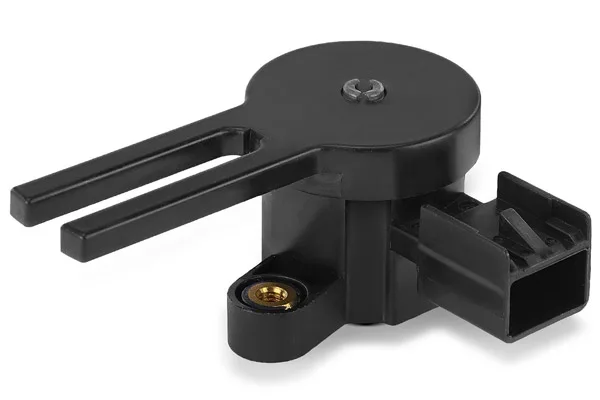
Brake sensors
Why Vacuum Casting Is Used for Automotive Sensors
|
Advantage |
Benefit for Sensor Development |
| Material Versatility | Resins can mimic glass-filled nylon, PBT, PEEK, or silicone for thermal, chemical, and mechanical testing. |
| Speed & Low Cost | Produce 10–30 functional prototypes in 2–3 weeks, avoiding expensive tooling during the R&D phase. |
| High Accuracy | Captures fine details like O-ring grooves, mounting threads, connector latches, and venting channels. |
| Multi-Material Simulation | Can combine rigid and flexible resins in one part |
| Surface Finish Quality | Achieves near-production textures, colors, and finishes for customer presentations and design approval. |
Typical Development Workflow
1. Design & Master Model: A high-precision master is 3D-printed (via SLA/DLP) or CNC-machined.
2. Silicone Mold Creation: A flexible mold is cast around the master, capturing all details.
3. Vacuum Casting: Polyurethane resin is degassed and poured into the mold under vacuum to eliminate bubbles.
4. Post-Processing: Parts are demolded, trimmed, and often finished with:
- Chemical-resistant coatings
- EMI/RFI shielding (metallization for prototype electronic housings)
- Laser etching for labels and logos
5. Validation Testing:
- Dimensional & Fit Checks
- Thermal Cycling (from -40°C to 125°C)
- IP Rating Tests (dust/water ingress protection)
- Vibration & Shock Resistance Trials
Common Material Simulations for Automotive Sensors
|
Target Production Material |
Vacuum Casting Simulation Resin |
Typical Sensor Application |
| PA66-GF30 (Nylon) | Rigid, glass-filled-like polyurethane | Engine bay sensor housings |
| PBT (Polybutylene Terephthalate) | Heat-stable, chemical-resistant resin | Connectors & electrical components |
| TPU (Thermoplastic Polyurethane) | Flexible, abrasion-resistant elastomer | Seals, grommets, protective boots |
| PC-ABS (Polycarbonate Blend) | Tough, impact-resistant transparent/opaque resin | Camera/LIDAR housings, interior sensors |
| Silicone | Soft, high-temperature flexible resin | Vibration dampers, custom gaskets |
Limitations & Considerations
Volume Cap: Not for mass production (typically ≤ 50 units per mold).
Long-Term Performance: Cast resins may not fully match the long-term aging, fuel resistance, or UV stability of production thermoplastics.
High-Temperature Limits: Most cast resins are limited to ~120°C continuous use, though specialty grades reach higher.
Strategic Role in Automotive Development
Vacuum casting accelerates sensor development by enabling:
- Early functional testing in real vehicle environments
- Design verification before investing in steel molds ($50k–$200k+)
- Supply chain validation with near-production-quality parts
- Regulatory & compliance pre-testing (EMC housing prototypes)
It serves as a critical bridge between prototyping and production, reducing time-to-market and de-risking the launch of next-generation automotive sensor systems.