
The Complete Guide to SLM 3D Printing: Unlocking Advanced Metal Manufacturing
Selective Laser Melting (SLM), also known as Direct Metal Laser Melting (DMLM), stands at the forefront of additive manufacturing (AM) technologies. This sophisticated process enables the production of complex, high-performance metal parts with unparalleled precision and strength. As industries such as aerospace, automotive, healthcare, and tooling increasingly adopt SLM, understanding its underlying technology becomes essential for engineers, designers, and manufacturers aiming to leverage its full potential.
This comprehensive guide delves into the technical intricacies of SLM 3D printing, exploring how it works, its advantages, challenges, and future trends.
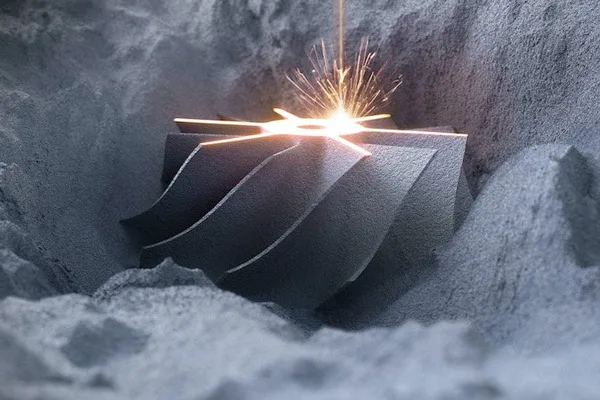
SLM
What is SLM 3D Printing?
SLM (Selective Laser Melting) 3D Printing is an advanced additive manufacturing process that builds metal parts layer by layer using a high-powered laser. In this technique, a fine metal powder—such as titanium, stainless steel, aluminum, or cobalt-chrome—is spread evenly across a build platform. The laser then selectively melts the powder according to a digital design, fusing the particles together to form a solid structure. After each layer is completed, the process repeats with a new layer of powder until the entire part is finished. Unlike traditional subtractive manufacturing, which involves cutting away material from a solid block, SLM adds material precisely where needed, allowing for the creation of complex geometries, internal channels, lattice structures, and lightweight designs that are difficult or impossible to produce with conventional methods.
How Does SLM Technology Work?
1. Preparation of the Digital Model
Design: The process begins with designing the component in CAD software, emphasizing considerations like support structures and orientation to optimize build quality.
Conversion: The CAD model is sliced into thin horizontal layers (typically 20-100 micrometers thick) to generate the STL or AMF file, which guides the printing process.
2. Powder Bed Preparation
Powder Material: Fine metal powders such as titanium, aluminum, stainless steel, Inconel, or cobalt-chrome are used. Particle size distribution (usually 20-50 micrometers) influences flowability and packing density.
Spreading: A recoater blade or roller spreads a uniform thin layer of powder across the build platform inside the build chamber.
3. Laser Fusing
Laser System: A high-powered fiber laser scans the powder bed according to the sliced layer data.
Selective Melting: The laser beam delivers intense energy to locally melt and fuse the powder particles together, forming a solid cross-section of the part.
Solidification: Rapid cooling solidifies the melted zones, creating metallurgical bonds with the underlying layers.
4. Layer-by-Layer Build
Repetition: The build platform lowers by one layer thickness, and a new powder layer is spread.
Repeat: The laser re-melts the new layer, bonding it to the previous layer, until the entire part is completed.
5. Post-Processing
Cooling: The build chamber gradually cools to reduce residual stresses.
Removal and Support Removal: Excess powder is brushed or blasted away, and support structures are removed.
Heat Treatment: Processes like stress relief, hot isostatic pressing (HIP), or machining enhance mechanical properties and surface finish.
Core Technologies Enabling SLM
Laser Technology
Fiber Lasers: Offer high power density, stability, and efficiency.
Beam Control: Precise galvo mirrors steer the laser beam, enabling high-resolution scanning.
Powder Handling
Flowability: Achieved through optimized particle size and shape.
Recycling: Unused powder can often be recycled with minimal degradation, reducing costs.
Process Monitoring and Control
In-situ Monitoring: Sensors track melt pool size, temperature, and layer quality.
Feedback Systems: Adjust laser parameters dynamically for consistent quality.
Software and Simulation
Slicing Software: Converts CAD to machine instructions.
Process Simulation: Predicts thermal behavior, residual stresses, and distortion, improving part quality.
Advantages of SLM Technology
Complex Geometries
SLM enables the fabrication of highly intricate structures that are impossible to produce with traditional methods. This includes internal channels for cooling or fluid flow, lattice frameworks for lightweighting, and conformal cooling systems that improve thermal management. Such geometries are essential for advanced engineering applications and innovative design solutions.
Material Efficiency
The process is highly precise, utilizing only the exact amount of material needed for each part. This near-net-shape manufacturing significantly reduces material waste, lowering costs and environmental impact. Excess powder can often be recycled and reused in subsequent builds.
Rapid Prototyping and Low-Volume Production
SLM allows for quick iteration of designs, enabling rapid prototyping without the need for expensive tooling. It is ideal for small-batch or low-volume production runs, making it suitable for customized, personalized, or highly specialized components.
Material Diversity
SLM is compatible with a wide range of metals and alloys, including stainless steel, titanium, aluminum, cobalt-chrome, and more. This versatility allows engineers to select materials with specific properties such as high strength, corrosion resistance, or biocompatibility, tailored to their application’s needs.
Design Optimization
SLM supports topology optimization and generative design techniques, allowing for the creation of lightweight yet strong structures. This leads to improved performance and efficiency in the final product.
High-Quality and Durable Parts
SLM-produced components typically exhibit excellent mechanical properties, including high density, strength, and fatigue resistance, making them suitable for demanding engineering applications.
On-Demand Production
The digital nature of SLM allows for on-demand manufacturing, reducing inventory costs and enabling just-in-time production strategies.
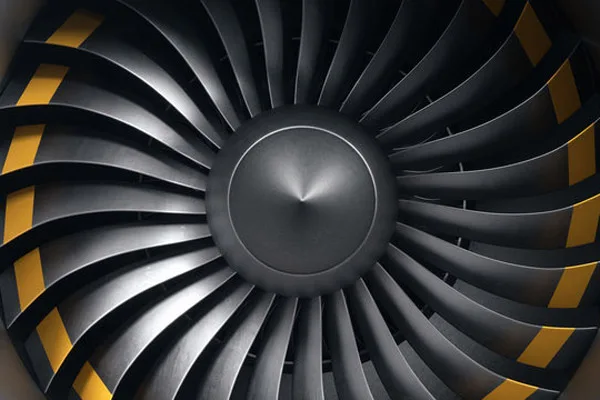
Turbine blades
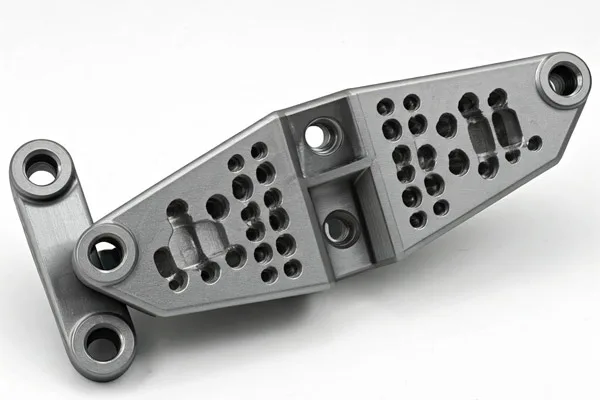
Aluminium steering knuckles
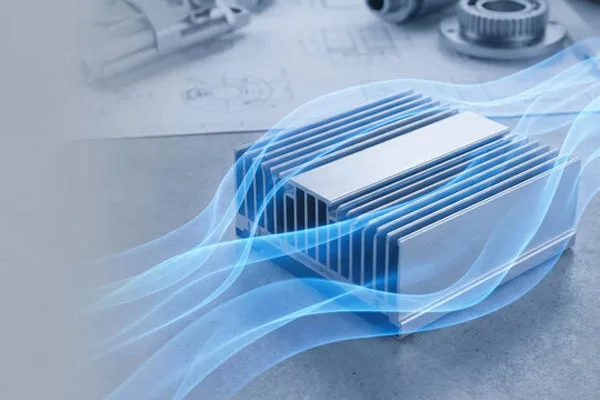
Heat sink
Applications of SLM 3D Printing in Industry
Aerospace: Lightweighting and Part Consolidation
The aerospace industry has been an early adopter of SLM due to its ability to reduce weight without compromising strength. Every gram saved on an aircraft reduces fuel consumption and emissions.
- Brackets and housings: Topology-optimized brackets made from Ti6Al4V can achieve 40–60% weight savings compared to machined aluminum equivalents.
- Heat exchangers: SLM enables intricate internal fin structures and conformal cooling channels that improve thermal efficiency by over 80% in aircraft oil and fuel cooling systems.
- Turbine blades and vanes: Nickel superalloys printed via SLM withstand extreme temperatures and pressures, with complex internal cooling passages that cannot be cast or drilled conventionally.
Medical and Dental: Patient-Specific Implants
SLM’s ability to create custom, biocompatible metal parts has revolutionized patient care.
- Orthopedic implants: Titanium acetabular cups, spinal cages, and knee replacement components are printed with porous lattice structures that mimic human bone. This reduces stress shielding and encourages bone ingrowth.
- Cranial and maxillofacial plates: Patient-matched plates and mesh implants are produced from CT scan data, ensuring perfect anatomical fit.
- Dental crowns, bridges, and frameworks: Cobalt-chrome and titanium dental restorations made by SLM offer superior marginal fit compared to traditional casting, with faster turnaround times.
- Surgical instruments and guides: Custom drill guides, cutting blocks, and retractors are printed for complex procedures, improving surgical accuracy and reducing operation time.
Automotive: High-Performance and Series Production
Automotive manufacturers use SLM for both prototyping and end-use parts, especially in motorsport and electric vehicles (EVs).
- Lightweight structural components: SLM produces suspension knuckles, control arms, and chassis nodes that are topology-optimized to save weight while maintaining crashworthiness.
- Thermal management: Conformal cooling channels in die-casting molds eliminate hotspots, reducing cycle times by 30–50% and improving part quality. SLM-printed heat sinks for EV power electronics achieve higher cooling efficiency in confined spaces.
- Powertrain components: Porsche used SLM to produce electric motor housings with integrated cooling ducts, reducing weight by 10% and improving continuous power output.
- Motorsport: Formula 1 and endurance racing teams rely on SLM for custom pistons, exhaust manifolds, and uprights, where rapid design iteration and low-volume production are critical.
Electronics and Heat Sinks
As electronic devices become more powerful, thermal management is a bottleneck. SLM enables next-generation cooling solutions.
- Micro-channel coolers: Liquid-cooled cold plates with impingement jets and fin arrays achieve heat transfer coefficients exceeding 50,000 W/m²·K.
- Integrated heat sinks: SLM can combine a heat sink and a structural housing into one piece, eliminating interface resistance and saving assembly time.
- Radio-frequency (RF) components: Waveguides and antenna brackets made from aluminum or copper offer high electrical conductivity and geometric precision for 5G and satellite systems.
Challenges and Limitations
Build Size Constraints
The maximum size of parts that can be produced is limited by the dimensions of the build chamber and powder bed. Large components may need to be built in sections and assembled post-production, which can increase complexity and potential for errors.
Residual Stresses and Distortion
The rapid heating and cooling cycles during the melting process generate internal residual stresses within the part. These stresses can cause warping, distortion, or even cracking if not properly managed through optimized process parameters and post-processing heat treatments.
Surface Finish and Post-Processing
As-built surfaces are often rough and may contain layer lines, porosity, or minor imperfections. Achieving a smooth, functional surface typically requires additional post-processing steps such as machining, polishing, or surface treatments, adding time and cost.
Material Costs and Availability
High-quality metal powders suitable for SLM are often expensive and may have limited suppliers. The cost of raw materials can significantly influence the overall expense of production, especially for small batches.
Future Trends in SLM Technology
Multi-Material Printing: Developing systems capable of printing with multiple metals in a single build.
Hybrid Manufacturing: Combining SLM with subtractive techniques for improved precision.
Artificial Intelligence (AI) Integration: Enhancing process control, quality prediction, and design optimization.
Larger Build Volumes: Advancements in chamber design to accommodate bigger parts.
Sustainable Practices: Improved powder recycling, energy efficiency, and environmentally friendly materials.
Conclusion
SLM 3D printing represents a groundbreaking advancement in metal manufacturing, fundamentally transforming the landscape of production, design, and innovation. Its unique ability to produce complex, lightweight, and high-strength components with remarkable precision unlocks new possibilities that were once thought impossible with traditional manufacturing methods.
As the technology continues to evolve, improvements in laser systems, material formulations, and process control are enhancing part quality, reducing costs, and expanding the range of applicable industries. The integration of sophisticated software and automation further streamlines workflows, enabling faster turnaround times and increased scalability for both prototyping and small-batch production.
With the ongoing push toward Industry 4.0, SLM is poised to become an integral part of smart factories, supporting digital twins, real-time monitoring, and data-driven decision-making. This synergy will lead to higher reliability, better consistency, and optimized processes, making SLM more accessible and practical for mainstream manufacturing.
Looking ahead, the potential of SLM to foster innovative design solutions, reduce material waste, and shorten supply chains positions it as a key driver of sustainable and efficient manufacturing practices. Its ability to produce customized, high-performance parts on demand will empower industries to meet evolving market demands with agility and precision.
In essence, SLM 3D printing is not just a technological advancement but a catalyst for reshaping the future of manufacturing—enabling smarter, more sustainable, and more innovative production paradigms that will benefit industries and consumers alike for years to come.