
Vacuum Casting: A Comprehensive Guide for Advanced Prototyping and Low-Volume Production
Many companies utilize vacuum casting to generate high-fidelity prototypes and industrial-grade parts. It is a rapid and effective method for producing design-validated samples and functional components in low volumes, typically from 1 to 50+ units. By using reusable silicone molds and thermoset casting resins, it creates near-injection-molding-quality copies from a master pattern with exceptional accuracy.
The end-products are used for rigorous applications including functional verification, engineering testing, pre-production marketing campaigns, and as master patterns for secondary tooling. As a strategic bridge between digital design and mass production, vacuum casting de-risks product development and accelerates time-to-market.
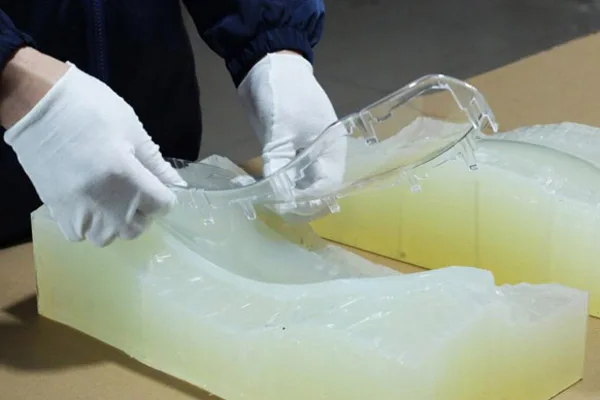
Vacuum casting mold
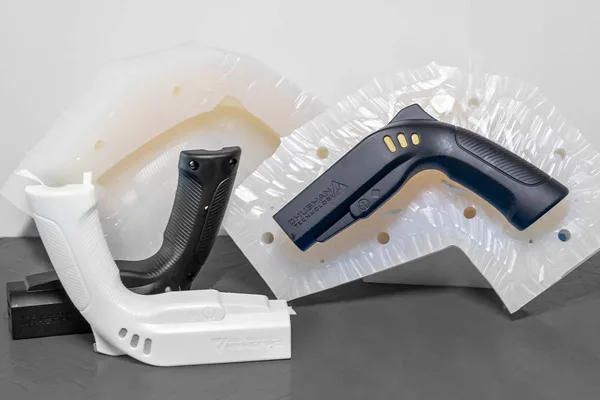
Vacuum casting service
The Vacuum Casting Process: From Master Pattern to Final Part
The process is defined by meticulous attention to detail at each stage to ensure maximum fidelity.
1. Master Pattern Fabrication & Preparation:
The foundation is a master pattern, which must exhibit superior dimensional stability and surface finish. While CNC machining (from materials like ABS, PMMA, or aluminum) is preferred for ultimate accuracy and temperature resistance, 3D printing (SLA, MJF) is common for complex geometries. Critical preparation involves:
- Surface Sealing & Priming: 3D-printed masters require sealing with epoxy or urethane-based primers to prevent resin inhibition during silicone curing and achieve a pore-free surface.
- Dimensional Compensation: Technicians may strategically oversize the master to account for the shrinkage of both the silicone mold (0.1-0.3%) and the polyurethane resin (0.15-0.5%).
- Finishing: The pattern is perfected through sanding, polishing, and painting.
2. High-Performance Silicone Mold Making:
The master is placed in a casting frame and surrounded by a degassed, two-part platinum-cure silicone.
- Vacuum Degassing: Prior to pouring, the mixed silicone is placed in a vacuum chamber to eliminate entrapped air, preventing mold defects.
- Controlled Cure Cycle: Curing occurs in a temperature-controlled oven (40-60°C) for 6-16 hours to ensure complete cross-linking, maximizing mold tear strength and longevity.
- Strategic Mold Cutting: After curing, the mold is meticulously segmented along complex parting lines using surgical tools. Mold gates and vents are manually carved to optimize resin flow.
3. Vacuum-Assisted Resin Casting & Curing:
The production cycle begins by clamping the silicone mold.
- Material Selection: Two-component polyurethane resins are chosen from a vast library to simulate properties of final production plastics. Additives for color or performance are incorporated.
- Vacuum Infusion: The mixed, degassed resin is poured into the mold’s sprue while the assembly is inside a vacuum chamber. The sustained vacuum evacuates air from the cavity, preventing voids and ensuring complete replication of fine features and textures.
- Post-Cure: After demolding, parts often undergo a thermal post-cure cycle to achieve ultimate mechanical properties and stability.
Why Vacuum Casting is Preferred in Prototyping and Beyond
Manufacturers prefer vacuum casting due to a combination of speed, quality and strategic versatility.
Superior Fidelity and Functional Performance
Because the master pattern is finished to perfection and the process eliminates air bubbles, replicas exhibit excellent surface detail, replicating textures down to VDI 3400 standards and holding tolerances of ±0.1 mm per 100 mm. Crucially, it allows for “form, fit, and function” testing with materials that mimic final production plastics, enabling validation of assemblies, snap-fits, and living hinges.
Accelerated Development via Rapid Soft Tooling
Silicone molds represent a class of “soft tooling” produced in 1-3 days, bypassing the weeks required for hard steel tooling. This enables concurrent engineering—testing multiple design iterations in parallel using molds derived from updated masters—which is invaluable for tight deadlines.
Unmatched Material and Application Versatility
The process uniquely balances the look, feel, and performance of a product. Beyond aesthetics, technical resin allows prototypes to undergo real-world environmental, chemical, and ergonomic testing. This versatility extends to low volume manufacturing and bridge production for pilot runs, spare parts or complex components in the aerospace and medical sectors.
Cost-Effectiveness for Low Volumes
Once the master is made, vacuum casting is the most cost-effective method for producing high-quality duplicates. It avoids the high NRE (Non-Recurring Engineering) costs of hard tools. This efficiency allows financial resources to be allocated to further design iterations or other development stages.
Conclusion
Vacuum casting has evolved from a simple model-making technique into a strategic enabler for agile product development. By providing a fast, cost-effective path to high-quality, functional parts, it allows teams to validate designs, engage stakeholders and make risky manufacturing investments with confidence. Understanding its technical nuances-from material science to process limits-empowers companies to strategically employ it to compress development timelines and achieve a smoother transition to mass production.